


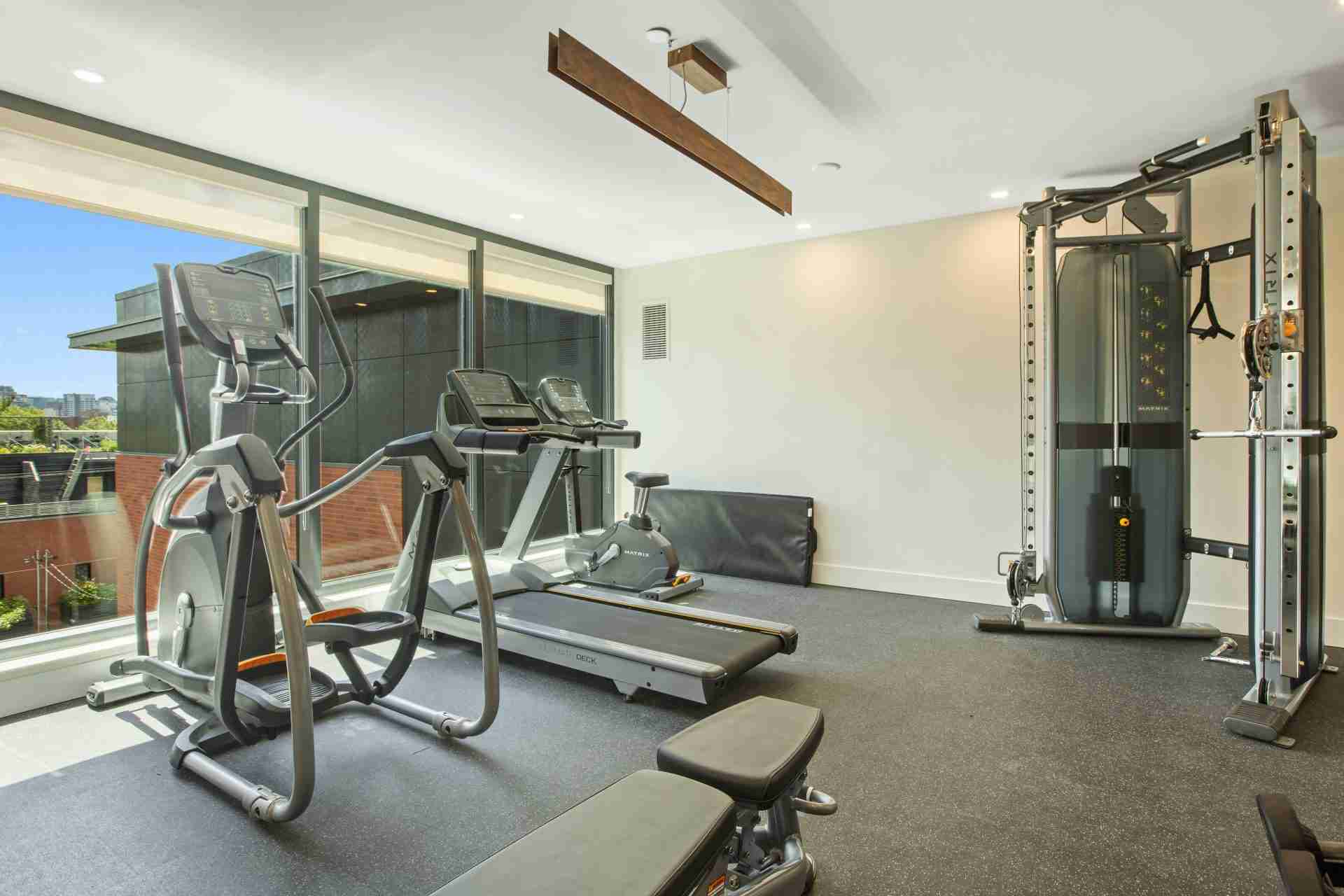
One of the most common questions I get as an in home personal trainer from clients setting up a home gym is whether to invest in a treadmill or an elliptical. Both equipment are usually the most common in home gym setup for home training or in home personal training. I have helped a lot of people make this decision, and the answer is almost never the same twice. It depends on why you are training, what your body can handle and how often you will be using it.
Both machines you can use to do cardio training, so they serve the same general purpose. However, there can be small nuances in how you can use them as part of your cardio or hybrid training. That’s what the breakdown below will cover, from a goal, injury and endurance perspective.
What Each Machine Actually Does
A treadmill is essentially moving belt. You walk or run on it, you control the speed and incline, and your body moves the way it does outside. Your feet strike the surface with each step. That creates an impact that can be bothersome for some people.
An elliptical on the other hand keeps your feet on pedals for the entire movement pattern. Your legs move in an oval or elliptical pattern, your arms push and pull handles, and at no point do your feet leave the machine. There is no impact phase at all. That’s one of the main differences between both machines. Your feet leaving the ground versus feet staying on the pedals, is what drives almost every other distinction between the two machines.
Everything else we will discuss from there such as calories burnt, muscle engaged, effect on heart rte, etc is based off that distinction.
So Is the Elliptical Good Cardio?
Yes, the elliptical is an excellent tool for cardio training. This is probably the most common misconception I run into. People tend to misclassify it as an easy machine. Something you use only for light sessions or active recovery from strength training.
What the Research Actually Says
A 2010 study published in the Journal of Strength and Conditioning Research compared treadmill and elliptical workouts at matched perceived exertion levels in 18 untrained participants. Researchers found no significant difference in oxygen consumption or energy expenditure between the two machines. When subjects exercised at the same RPE, calorie burn was comparable — despite heart rate running slightly higher on the elliptical. The study concluded that the elliptical is an acceptable alternative to the treadmill for non-competition-specific cardiovascular training. [1]
According to Harvard Health data, a 155-pound person burns approximately 335 calories in 30 minutes on an elliptical at moderate intensity. On a treadmill at a 10-minute mile pace, that number is roughly 372 calories. [2] The treadmill edges it out by about 10 percent. That difference comes down to one thing — running requires you to fully support and propel your own body weight with each stride. That gap narrows considerably when you increase resistance on the elliptical.
For anyone strength training and looking to add cardio, both machines are essentially equal from a calorie burn perspective.
The issue is that the elliptical is easy to do wrong. I see it at the gym constantly. If you are gripping the stationary rails, your arms are taking some of your weight off the pedals. You are reducing both the effort and the calorie burn without realizing it. Instead, use the moving handles and push through them. Or drop your hands entirely and let your legs do all the work. It will feel harder. It will also be more challenging on your upper body, and it will add a balance and stability demand your body has to work for.
Done correctly, with proper resistance and active engagement through the handles, the elliptical is a genuinely effective cardiovascular workout. Zone 2 cardio, fat burning sessions, and high intensity intervals all work well on it.
Read: What is Zone 2 cardio and how do you know you are in it — coming soon
Can the Elliptical Build Muscle?
It depends on what you mean by build muscle. The elliptical will not replace a strength training program, and it will not give you the kind of progressive overload that produces meaningful hypertrophy, which only comes from weight resistance. What it will do is recruit muscles, especially in your lower body.
Electromyography (EMG) studies have confirmed that using the arm handles on an elliptical significantly increases upper body muscle activation compared to treadmill running, where the arms swing freely without resistance. [3] The lower body drive pattern targets quads, glutes, hamstrings, and hip flexors. At higher resistance settings the elliptical creates enough load to maintain muscle tone and support functional strength, particularly for clients who cannot do heavy lower body work due to injury or joint issues.
The reverse stride feature is one of the most underused tools on the machine. Pedalling backward shifts the primary emphasis from quads to hamstrings and calves. You can technically walk backward on a treadmill too, but it requires holding the rails, is only practical at very low speeds, and is awkward enough that most people never do it. The elliptical’s reverse stride is smooth, safe at any resistance, and built into normal use. For clients with quad dominance or underdeveloped hamstrings, it is worth using intentionally.
For building muscle as the primary goal, neither machine is the right tool. That is what your strength training is for. But the elliptical does more total body work than the treadmill, which is essentially a lower body machine with some core engagement.
What Muscles Does the Elliptical Work vs the Treadmill?
Elliptical (forward stride): Quads, glutes, hip flexors, hamstrings, calves. With handles: chest, shoulders, biceps, triceps, upper back.
Elliptical (reverse stride): Hamstrings and calves become primary drivers. Glutes still active. Quad load drops significantly.
Treadmill (walking): Quads, glutes, hamstrings, calves, hip flexors. Core engages for balance and stability.
Treadmill (running): All of the above with higher demand, plus greater eccentric loading through quads and calves on each foot strike. This eccentric load is what builds the tendon and joint resilience that carries over to outdoor running.
Treadmill (high incline walking): Shifts emphasis heavily to glutes and hamstrings. Walking at 10 to 15 percent incline is one of the best low-impact posterior chain exercises available on a treadmill. Research by Silder, Besier, and Delp found a 113% greater metabolic cost for incline walking at 10% grade compared to flat walking at the same speed, that is more than double the calorie burn.
A 2025 study in the International Journal of Exercise Science also found that while flat running still burns more calories per minute than incline walking (about 13 vs 10 calories per minute), incline walking uses significantly more fat as fuel, 41% compared to 33% for running. For clients who cannot run but want meaningful cardiovascular and fat-burning output, high incline walking is the most effective treadmill protocol available.
Is the Elliptical or Treadmill Better for Weight Loss?
Both machines burn calories almost equally effectively. The machine that is better for weight loss is the one you use consistently with sufficient effort. Here is how I think about it for different situations.
If you have no joint issues and can run or do incline walking comfortably, the treadmill gives you more options. You can sprint, run intervals, walk with incline, or progressively increase your pace. The higher the intensity, the more calories you burn per session.
If you suffer from joint pain around your knees, or have an injury history that makes bearing your own bodyweight uncomfortable, the elliptical is the better option. It is much softer on your joints. You can still work hard on it. The key is consistency — aim for 30 to 45 minutes, three to four times per week to start seeing results.
Can You Lose Weight on Just the Elliptical?
Yes, with caveats. The elliptical has a genuine advantage for longer sessions. Because there is no impact, you accumulate less joint fatigue over 45 to 60 minutes. That means you can sustain a fat-burning Zone 2 pace for longer. Your knees and shins are not the limiting factor. Research suggests elliptical users often sustain longer workout durations than treadmill users. Over time, that can balance or even exceed total weekly calorie expenditure.
Read: Zone 2 cardio workout at home — no equipment needed — coming soon
Incline Walking on the Treadmill for Weight Loss
For treadmill weight loss specifically, incline walking is the most underrated protocol. Research shows that walking at 10 percent incline more than doubles the calorie burn compared to flat walking at the same speed. It also burns significantly more fat as a fuel source than flat running — 41 percent versus 33 percent in a 2025 study in the International Journal of Exercise Science. [8,9] Flat running still burns more calories per minute overall. But for clients who cannot or do not want to run, high incline walking is the most effective alternative on the treadmill. And it is much easier on the joints.
Treadmill vs Elliptical for Joint Pain or Injury
When it comes to joint pain or injury, this is where the decision between both machines is much easier. Elliptical will definitely win when it comes to the machine that is much safer to use, since it creates a lot less impact on your body. Here is why. Treadmill running generates two to three times your body weight in force with each foot strike. For a 150-pound person, that is 300 to 450 pounds of force per stride, thousands of times per session. That load is bearable for someone with healthy joints. However, it can become a problem for someone with inflamed or injured joints. Let’s break this down even further and look at some of the most common injuries people generally, but especially runners suffer from.
Knee pain and patellofemoral syndrome
Patellofemoral pain syndrome (PFPS) is pain at the front of the knee, around or behind the kneecap. It develops when the kneecap does not track smoothly in its groove during movement, creating friction and irritation on the cartilage underneath. It is one of the most common overuse injuries in runners and active adults, and it gets worse with repeated knee flexion under load. Stairs, squatting and running are usually some of the most common causes.
In this case the winning machine will definitely be the Elliptical. When you run, each foot strike creates a compression phase where the kneecap is driven into the femur as the knee absorbs the impact load. On the elliptical, the feet stay on the pedals throughout. This means that there is no impact phase and no compression spike on your knee joint. The gliding motion keeps the knee moving through its range without the loading pattern that aggravates the tracking problem. Most people with PFPS can train on the elliptical pain-free even when they cannot run at all.
Shin splints (medial tibial stress syndrome)
Shin splints is more of an umbrella term for pain along the inner edge of the shinbone. The underlying issue is stress and micro-damage to the periosteum — the connective tissue layer surrounding the tibia — caused by repetitive impact loading. It is extremely common in runners who increase mileage too quickly, run on hard surfaces, or have poor footwear. Left unmanaged, it can progress to a stress fracture.
The winning machine in this case is also the elliptical. Treadmill running is usually what causes the problem, as every foot strike loads the same tissue that is already inflamed. The periosteum needs time away from repetitive impact to repair. The elliptical lets you maintain cardiovascular fitness and lower body conditioning through the entire recovery period without reloading the tibia. Once a physio or doctor clears you, return to treadmill running progressively and maintain a few treadmill workouts as a split with treadmill.
IT band syndrome (iliotibial band syndrome)
The IT band is a thick band of connective tissue that runs along the outside of the thigh from the hip to just below the knee. IT band syndrome develops when this tissue becomes irritated at the point where it repeatedly crosses the lateral femoral condyle — the bony prominence on the outside of the knee — during the flexion and extension cycle of running. It is almost exclusively a repetitive motion injury and is most common in runners, cyclists, and hikers.
For this specific injury, the elliptical will also win, but with caveats. The elliptical reduces the repetitive hip flexion-extension loading pattern that drives IT band irritation during running. The oval stride path is less mechanically loading than the straight-line running gait for most people.
That being said, the elliptical is not a guaranteed safe option for everyone with IT band issues. It depends on the severity of the injury, because some find any repetitive lower body movement can be very aggravating to the IT band. If the elliptical causes lateral knee pain, stop and give it more rest before returning.
Lower back pain
Lower back pain is one of the most common musculoskeletal complaints in adults and can have many causes ranging from disc issues, muscle strain, poor posture, weak core, or even tight hip flexors. Exercise is generally beneficial for lower back pain management, but the type of movement and load matters significantly.
When it comes to lower back pain, there’s no really one winning machine, but I’d lean more towards the treadmill (walking, low incline). Walking on a treadmill at low to moderate incline is typically well-tolerated for most lower back pain and can help maintain lumbar mobility and strengthen the supporting muscles. Keep it to walking pace, and definitely avoid running as it adds enough spinal compression and can aggravate your pain.
The elliptical requires more caution when it comes to lower back pain. This is because the sustained repetitive motion can load your lumbar spine in ways that aggravate certain back conditions, particularly if your core is already weak and your lower back falls into anterior pelvic tilt — pelvis tipping forward, lower back arching. If your back hurts after an elliptical session, that postural breakdown is the most likely cause. Keep your torso upright and core braced throughout.
One thing worth saying directly, cardio machine choice matters less for lower back pain than your strength training does. If you are not including posterior chain work in your routine — deadlifts, Romanian deadlifts, good mornings, hip hinges — you are managing symptoms without addressing the underlying weakness.
A stronger posterior chain means better spinal support, better posture under load, and less pain over time. The proper posterior chain strength training is the long-term fix, not cardio.
Post-surgical return to cardio
After surgery — whether orthopaedic (hip replacement, knee reconstruction, ACL repair) or general — returning to cardiovascular training requires a phased approach. This applies to athletes and general active adults equally. The primary concern early in recovery is protecting healing tissue from overloading stress while maintaining cardiovascular conditioning.
Most return-to-run or return-to-activity protocols involve progressive loading, starting with zero-impact activity before introducing weight-bearing and then gradual impact.
The elliptical is definitely the winning machine here, almost without exception. Zero impact makes it the standard recommendation for returning to cardio training before impact loading is introduced. The smooth, controlled motion allows your cardiovascular system to work without stressing healing tissue or surgical sites. Make sure to follow your surgeon or physio’s specific clearance timeline. This is general guidance and is not a substitute for individualized post-op instructions.
Bone density
Bone density refers to the amount of mineral content in bone tissue. It peaks in your late 20s and starts declining gradually after that, accelerating significantly in women after menopause due to the drop in oestrogen. Low bone density (osteopenia) can progress to osteoporosis, significantly increasing fracture risk.
Weight-bearing, impact-based exercise is one of the most effective ways for stimulating bone remodelling and slowing density loss.
In this case, the treadmill is definitely the winning machine. The mechanical load of each foot strike sends signals to bone-forming cells (osteoblasts) to increase activity. A study published in Osteoporosis and Sarcopenia found that treadmill walking three times per week for three months significantly increased both bone resorption and formation markers in postmenopausal women, highlighting evidence of active bone remodelling. [6] The elliptical provides zero mechanical loading to the skeleton because your feet never leave the pedals, so this load stimulus is not there.
For women over 35, and especially those in perimenopause or post-menopause, I highly recommend some form of weight-bearing treadmill work in your routine. It does not need to be running — brisk walking at moderate incline is enough to generate that loading stimulus and bone adaptation.
Treadmill vs Elliptical for Runners Training Indoors
If you are training for a road race — a 10K, half marathon, or triathlon — the treadmill is of course the more relevant machine choice. The movement pattern, muscle recruitment pattern, eccentric loading, and cardio adaptations you build on a treadmill transfer directly to outdoor running. You are practicing the actual movement repeatedly.
An elliptical can match a treadmill in heart rate and calorie burn, but it cannot replicate the running gait. The stride pattern is different, the foot contact is different, and the eccentric loading that builds the tendon and joint resilience you need for pavement running is absent on ellipticals. I have worked with runners who used only the elliptical due to knee pain throughout the whole winter in Toronto and came back to road running in April noticeably less conditioned. His cardio fitness was still there, but every time he ran on the treadmill his knees would flare up and he wouldn’t be able to continue. The absence of replicated gait pattern on the ellipitcal made his body deconditioned structurally.
That said, the elliptical is valuable as a supplement for runners. Use it on recovery days for low-impact aerobic volume, or when an injury means you cannot run but need to keep moving. It is a tool in the training week, not a replacement for the treadmill if running is your primary goal.
Read: Zone 2 cardio on a treadmill: how to train smarter not harder — coming soon
Elliptical vs Stationary Bike vs Treadmill: How Do They Compare?
Since we are here, this comparison comes up often enough to address it too.
The stationary bike removes impact entirely, like the elliptical, but also removes most upper body engagement and the standing posture. It is the lowest-impact option and the easiest on the lower back. For clients with knee replacements, hip issues, or significant cardiovascular limitations, the bike is often the starting point.
The elliptical requires you to stand and support your body weight throughout the movement, which is more metabolically demanding than sitting on a bike. It also engages the upper body when you use the handles. For most people without specific limitations, the elliptical burns more calories than the bike at the same perceived effort.
The treadmill is the highest impact of the three and the highest calorie burn at running intensity. It is the most transferable to real-world movement and the most effective for bone density.
If I had to rank them for a general fitness client with no injury history: treadmill first, elliptical second, bike third — unless you are training for a triathlon or bike race, in which case the bike belongs at the top because specificity matters. For a client managing joint issues or returning from injury, the order gets flipped.
The 70/30 Split
If you have access to both machines, here is how I recommend splitting your time: 70 percent treadmill, 30 percent elliptical.
Use the treadmill for your main sessions. These are intervals, incline work, long runs, progressive pace training. The elliptical workouts are on recovery days or when you want to add aerobic volume without adding more impact on top of your already loaded joints from running. A common split I recommend to my clients is, if you are training cardio four days a week, three sessions go on the treadmill and one goes on the elliptical, usually the day after your hardest session.
The reason it is 70/30 and not 50/50 is that the treadmill builds things the elliptical cannot such as bone density, running mechanics, eccentric loading through the quads and calves. The elliptical is a support tool that is excellent for recovery and low impact training. If you are trying to build your running capacity and find that running 3 times a week is very hard on your joints, you can shift to 50/50 and gradually build up from there. So the ratio is not really fixed. Shift it toward the elliptical during high volume training blocks when your joints are accumulating stress, when you are managing a minor injury, or during off season winter training when road running becomes more challenging. If you sign up for race in Spring/Fall and want to go back to base building phase, then go back to the treadmill. Training is never the same throughout, it’s usually periodized stages, whether it’s strength or cardio.
For Your Home Gym: Space, Noise & Cost Considerations
Before you look at a single product listing, there are four practical questions that will narrow your decision faster than any spec comparison.
How much space do you actually have and have you measured it?
This sounds obvious but most people skip it. Treadmills average 6.5 feet by 3 feet, and you need clearance behind the belt for safety, at minimum another 2 feet so that if you stumble, you are not landing against a wall. Ellipticals run smaller, around 5 feet by 2.5 feet, with no rear clearance needed. That difference matters a lot in a 500 square foot condo.
If space is tight, a folding treadmill reduces the footprint roughly in half when stored vertically. They work well for walking and moderate jogging, though the belt length on most folding models is shorter, which can feel cramped if you are tall or running at higher speeds.
Read: Best compact treadmills for home training — coming soon.
One thing people consistently overlook with ellipticals: ceiling height. The striding motion lifts your body slightly at the top of each cycle. Most ellipticals need at least 8 feet of clearance. If you are putting one in a basement or a room with a lower ceiling, measure before you buy, you don’t want to be crammed in a small space when peddling.
Do you have downstairs neighbours?
If you are in a condo or apartment building, this question matters more than almost anything else. Treadmills can be very loud. The motor runs constantly, and every foot strike transmits impact through the floor. Running on a treadmill at 6am in a condo is a real imposition on whoever lives below you, and it will eventually become a problem. Ellipticals are significantly quieter. The motion is smooth, there is no belt slap, and most of the sound is just the mechanical glide of the flywheel. If noise is a constraint, the elliptical definitely wins this category.
What is your actual budget including maintenance?
The sticker price is usually not the full cost. Quality treadmills run $800 to $3,000 upfront. But there are some extra costs to them. This is because they require ongoing maintenance such as belt lubrication (every few months if you have high mileage), deck inspection regularly, and eventual belt replacement every few years depending on use. It is not a large expense per se, but it is a recurring one. Cheap treadmills also tend to need it sooner.
Ellipticals start lower, around $500 to $1,500 for a solid home model. Maintenance cost is minimal because there is no motor or belt to wear out. If you are working with a tighter budget, the elliptical generally gives your return per dollar and lower long-term ownership cost compared to a treadmill.
Will you actually use it?
In my experience working with people in their homes as an in home personal trainer, the most expensive cardio machine is the one you buy, use a few times, and then store away.
Before buying either machine, be honest with yourself about how often you are going to use it, whether you are ready to build a routine around it, and how you will set it up in a way that creates the least resistance. A cheaper machine you actually use three times a week will do more for your fitness than a premium one tucked away or sitting collecting dust at a house corner.
Which One Should You Get
We’ve discussed how each machine differs in terms of calories burnt, muscles engaged, injury history and home setup considerations. The decision usually comes down to three things: what you are training for, what your body can handle, and what your current home allows. Here is how I break it down.
Get a Treadmill If Running or Bone Health Is Your Priority
Get a treadmill if running is your primary goal or bone health is something you’re thinking about for longevity. The treadmill is the right machine when:
- You are training for a road race or want to maintain running fitness year-round
- Bone density is a concern — particularly for women over 35
- Your joints are healthy and you can tolerate impact without issues
- You want the full range of walking, jogging, running, and incline work in one machine
Get an Elliptical If Joint Health or Space Is the Main Constraint
Get an elliptical if joint health or your home is the main constraint. It makes more sense when:
- You are managing knee pain, IT band issues, or shin splints
- You are returning from surgery or an injury and need zero-impact cardio
- You are in a condo where noise and downstairs neighbours are a real factor
- You want a full body cardio machine you can sustain long term without wearing your joints down
If Strength Is Your Goal, Start There First
If strength and body composition are your primary goals, a cardio machine is a nice-to-have, not a must-have. A well-designed strength program addresses cardio conditioning through the work itself, and whatever gaps remain get filled by walking outside, running a few times a week, or jump rope. If budget and space are limited, invest in your strength setup first. A treadmill or elliptical can always come later once the foundation is in place. At that point you will also have a much clearer sense of which one actually fits how you train.
Read: In-home personal training: what setup do you actually need
One exception worth mentioning: harsh winters like Canada. If icy sidewalks and -20°C windchill consistently demotivate you from working out or running outdoors for four or five months a year, either machine solves that problem. Which one depends on everything covered above — your goals, your joints and injury history, your space, and what you will actually use. The treadmill is a better and more natural fit if you are a runner. The elliptical works better if your joints do not tolerate impact well or you prefer more of a full-body cardio workout.
Still Not Sure What Your Home Gym Actually Needs?
This is exactly the conversation I have with new clients before they spend money on equipment. If you are working with an in home personal trainer in Toronto, the program comes first and the equipment list, if there is one, comes from the program.
Book a free discovery call and we will figure out what your setup actually needs before you buy anything.
Sources
- Brown GA, et al. “Comparison of energy expenditure on a treadmill vs. an elliptical device at a self-selected exercise intensity.” Journal of Strength and Conditioning Research, 2010.
- Harvard Health Publishing. “Calories burned in 30 minutes for people of three different weights.” Harvard Medical School, 2021.
- Peak Primal Wellness. “Elliptical vs Treadmill.” March 2026.
- Fitness Superstore. “Elliptical vs Treadmill.”
- Koda R, et al. “Comparison of vertical ground reaction forces during overground and treadmill running.” PubMed, 2012.
- Panyod S, et al. “Bone turnover increases during supervised treadmill walking in Thai postmenopausal women.” Osteoporosis and Sarcopenia, 2016.
- University of Cape Town. Cited in: Half Marathon Guide, “The Injured Runner’s Guide to Training.”
- Silder A, Besier T, Delp SL. “Predicting the metabolic cost of incline walking from muscle activity and walking mechanics.” Journal of Biomechanics, 2012. Cited in: PMC, “An Exploratory Study Comparing the Metabolic Responses between the 12-3-30 Treadmill Workout and Self-Paced Treadmill Running“
- Balshaw TG, et al. “12-3-30 vs self-paced running: metabolic responses.” International Journal of Exercise Science, 2025. Cited in: Tom’s Guide.