


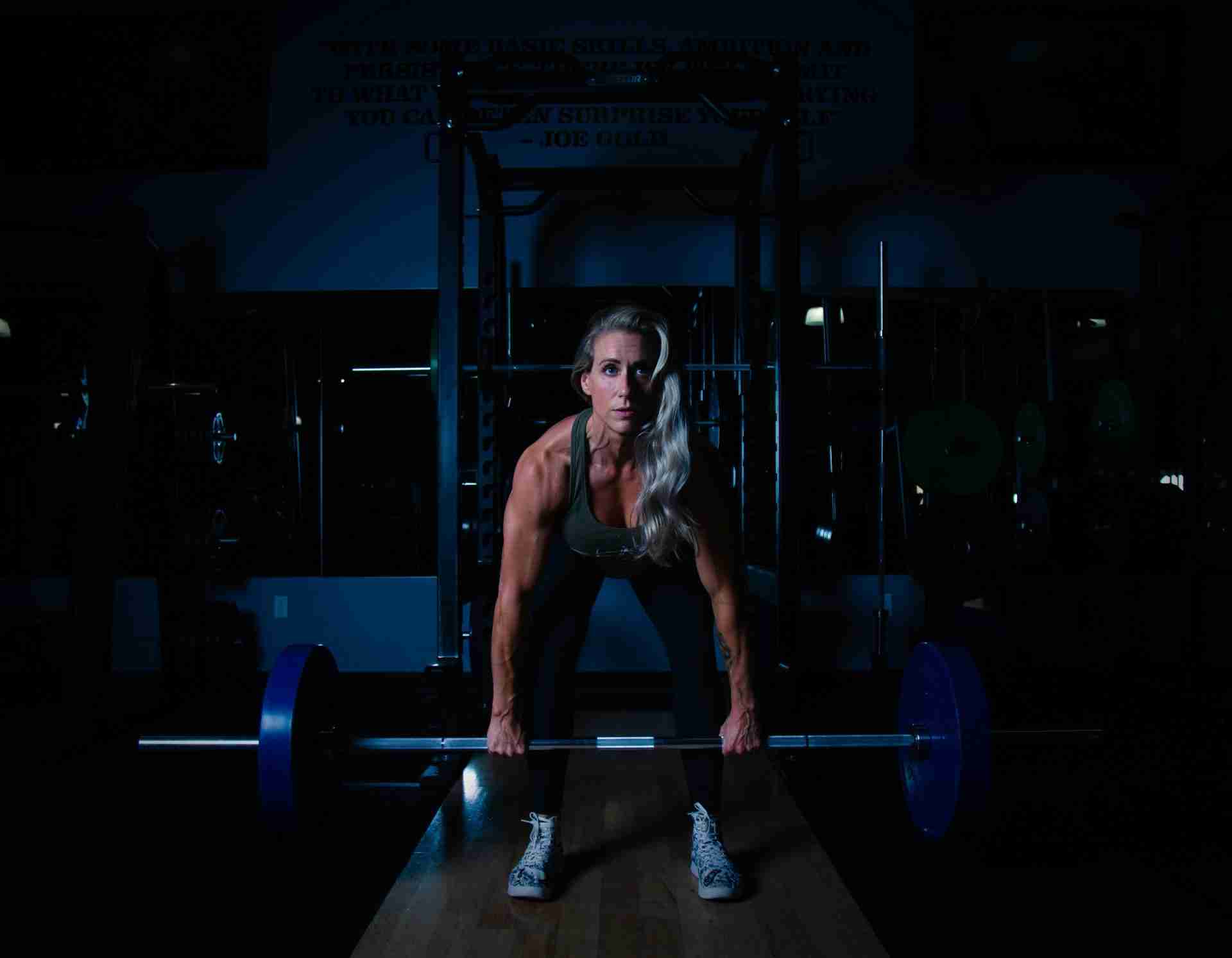
Most women who start lifting are not trying to look like a bodybuilder. They want to feel stronger, move better, and see their body actually change from the work they are putting in. The problem is that most advice out there is written for men, too generic to be useful, or focused on fat loss when the real goal is muscle gain.
Building muscle as a woman is specific. It responds to a different mix of training, recovery, and nutrition than cardio or fat-loss work, and it takes a little more patience than most people expect. If you want to know how to build muscle mass women can actually maintain, the answer is straightforward: lift with progression, eat enough, recover well, and stay consistent.
First: Understand the muscle-building equation
Muscle grows when you provide a stimulus that forces adaptation. That stimulus is progressive overload—the systematic, incremental increase of stress on the body. You can achieve this by adding load, increasing reps, adding sets, or slowing down your tempo. Without this consistent challenge, the body has no reason to create new tissue.
Most women stall because they repeat the same routine for months. They find a “comfortable” workout and stick to it. If the stimulus never changes, your progress will stop at maintenance. To build lean muscle mass, you have to keep raising the bar.
The other half of the equation is adequate recovery. Muscle isn’t built while you’re lifting; it’s built while you’re resting and repairing the microscopic damage caused by that training stimulus. If you skip recovery, you’re just breaking tissue down without giving it the time to rebuild stronger.
If you’re starting from scratch, read the Complete Guide to Strength Training for Women first, then come back here.
Nutrition: The foundation of adaptation
You cannot build muscle in a meaningful calorie deficit. Your body needs surplus energy to synthesize new tissue. A modest surplus of 200–300 calories above maintenance is usually enough to support muscle growth without excessive fat gain.
Protein targets for muscle building
If you’re training consistently, aim for 1.0 to 1.2 grams of protein per pound of bodyweight daily. This is the non-negotiable range for muscle protein synthesis. Most women eat far less than this without realizing it.Spread your intake across the day. Your body can only synthesize so much protein at once; hitting 25–40 grams per meal is a practical target that keeps muscle-building signals active. On adequate protein intake, see How Much Protein Do You Need for Muscle Gain
Why carbohydrates matter
Carbohydrates fuel your training and replenish glycogen stores. If you consistently undereat carbs, your training intensity will eventually drop, and your recovery will get suffer. This is especially true during the luteal phase of your cycle when your energy demands and metabolic rate shift. Learn more about training on your period.
Training for hypertrophy
Compound movements first
Squats, deadlifts, pressing, and rowing should form the backbone of your training routine. These movements recruit the most muscle mass simultaneously, giving you the best return on your time. If your program is built around isolation exercises like curls and leg extensions, you’re missing out on the primary drivers of muscle growth. Aim for 3-5 compound movements per session, with isolation work as the accessory at the end to stimulate muscle growth. The best way to build muscle and boost muscle growth isn’t complexity – it’s consistency with progressive overload applied over months.
Volume and effort
Research consistently shows that training major muscle groups at least twice per week outperforms once-a-week frequency for hypertrophy. An upper/lower split over four days or a full-body routine over three days works well for most intermediate trainees.
While you can build muscle in a wide rep range (anywhere from 5 to 30 reps), the 8–12 range is the sweet spot for most women; it allows for enough load to be challenging while keeping volume manageable. Above all, effort matters more than the rep range. If you’re finishing a set and feel like you could have done 5 more reps, you aren’t pushing yourself hard enough to trigger growth.
The hormonal reality
Women build muscle through the same core mechanisms as men, but the hormonal environment is different for women is different.
Testosterone helps drive muscle protein synthesis, and while women have significantly less of it, they still build muscle effectively through progressive training. The fear of accidentally becoming “too bulky” is unfounded; you are working against a hormonal ceiling that most people will never reach through natural training alone.
Conversely, estrogen has muscle-preserving properties. Women often recover well and can tolerate high weekly training volumes. Instead of viewing female physiology as a limitation, use it: emphasize consistent weekly volume and high-quality movement patterns to see what your body is actually capable of.
For women with PCOS, the picture changes a bit. Elevated androgens can support muscle building, but insulin resistance can affect recovery and how well the body uses fuel. In that case, hard training every day usually backfires. Heavier compound work, enough rest, and better carbohydrate timing around sessions tend to work better.
Understanding the timeline
Meaningful changes in muscle size typically take 6 months to 2 years of consistent, progressive training. The first 8 to 12 weeks are mostly about neurological adaptation, you’re getting stronger, but you might not look much different yet. That is normal, because visible gain takes time. Signs that you are in that phase usually show up as better posture, stronger lifts, more stability, and clothes fitting differently before the scale changes dramatically.
Can you build muscle and lose fat at the same time?
Yes, but there are limits. Body recomposition, that is losing fat while gaining muscle, works best for women who are new to training, coming back after a break, or carrying more body fat. In those cases, the body has enough room to use stored energy while still building new tissue.
If you have been training consistently for a year or more, recomposition slows down because your body has adapted to easy gains. At that point, a dedicated muscle-building phase usually works better. Eating at a slight surplus tends to yield better results than trying to force a deficit and a surplus at the same time.
Your next move
If your goal is how to build muscle mass women can actually keep, the formula is not complicated. Train hard enough to force adaptation, eat enough protein and carbs to support it, and give your body the time to recover. The women who see the best results are not doing random workouts. They are lifting with purpose and staying consistent long enough for the work to show up. If you’re ready to build a program around your specific goals, book a free 20-min discovery call and we’ll talk about where you are and how to build the muscle you’re aiming for.