



Most women dramatically underestimate their protein needs when strength training. This isn’t a minor oversight, it’s the primary nutritional factor limiting muscle growth and recovery. Without adequate protein intake, your training efforts yield minimal results regardless of how perfectly you execute your workouts. Studies consistently show that women strength training require significantly more protein than sedentary individuals, yet most consume barely half of what their bodies need to build and maintain muscle tissue. Research from 2019 found that nearly half of women aged 50 and older fall short of recommended protein intake. The gap between actual intake and optimal intake represents lost progress, slower recovery, and unrealized strength gains. Here’s the practical framework for determining your protein needs and implementing a sustainable approach to muscle-building nutrition.
Key Takeaways
- Women often underestimate their protein needs when strength training, which limits muscle growth and recovery.
- Active women should aim for 1.6-2.2g of protein per kilogram of body weight daily, much higher than the 0.8g DRI for sedentary individuals.
- Distributing protein intake across 3-4 meals optimizes muscle protein synthesis rather than consuming it all in one meal.
- Prioritize complete protein sources, such as chicken, eggs, and Greek yogurt, and consider plant-based combinations for vegans.
- Avoid common mistakes like relying on dinner for protein or overestimating protein content in foods to meet your muscle-building goals.
Why Protein Requirements Change When Building Muscle
Your body requires protein for basic maintenance functions—repairing tissues, producing enzymes and hormones, maintaining immune function. When you add strength training to this baseline, you create additional protein demands that most women fail to account for.
Resistance training creates microscopic damage in muscle fibers. Your body repairs this damage through muscle protein synthesis, literally building new muscle tissue from amino acids derived from dietary protein. Without sufficient protein intake, your body cannot complete this repair process effectively. You’re essentially training without providing the raw materials your body needs to adapt and grow stronger.
Women who strength train without adequate protein intake experience slower recovery between sessions, minimal strength gains despite consistent training, persistent muscle soreness, and difficulty maintaining muscle mass even with regular training. These aren’t signs of poor programming or insufficient effort—they’re direct indicators of inadequate protein consumption.
The metabolic demands of muscle tissue also increase your baseline protein needs. Muscle is metabolically active tissue that requires ongoing protein for maintenance. As you build muscle through training, your daily protein requirements increase proportionally.
How Much Protein Women Actually Need for Building Muscle
The current Dietary Reference Intake (DRI) is 0.8g of protein per kilogram bodyweight applies to sedentary individuals maintaining existing muscle mass. However, research shows that women lose approximately 3-5% of muscle mass per decade after age 30 without resistance training. For women actively strength training with the goal of building muscle, requirements increase substantially.
Optimal protein intake for muscle building: 1.6-2.2g per kilogram of bodyweight daily, or approximately 0.7-1.0g per pound of bodyweight.
According to a study published in PMC (PubMed Central), “additional protein ingestion (1.6 g of protein/kg/day or higher) leads to small increments in lean body mass in studies enrolling young subjects in resistance training.” The ACSM recommends 1.2-1.7 g of protein per kg of body weight per day for increasing muscle mass with regular exercise.
For practical application:
- A 130-lb (59kg) woman needs 91-130g protein daily
- A 150-lb (68kg) woman needs 109-150g protein daily
- A 170-lb (77kg) woman needs 122-170g protein daily
These ranges account for training intensity, recovery needs, and individual metabolic variation. Women training at higher intensities, those in caloric deficits, or older women (40+) benefit from targeting the higher end of this range. This is significantly more than most women consume. The average woman consumes 60-80g protein daily, less than half of what’s needed for optimal muscle building.
Protein Timing and Distribution
Total daily protein intake matters most, but distribution throughout the day optimizes muscle protein synthesis. Your body processes protein more effectively when consumed in multiple doses rather than concentrated in one or two large meals.
Optimal approach: Distribute protein across 3-4 meals, consuming 25-40g per meal. Research shows that “about 25 to 30 g of protein is the amount required for muscle protein synthesis.” This pattern maintains elevated amino acid availability throughout the day, supporting continuous muscle protein synthesis rather than creating large gaps between protein intake.
Post-workout protein timing receives excessive attention but matters less than total daily intake. A study demonstrated that “the intake of 20 g whey protein administered every ~3 h was more effective at stimulating muscle protein synthesis over a 12 h period following bilateral leg exercise than protein-equated doses administered as smaller, more frequent pulses.” Consuming 25-40g protein within 2-3 hours post-workout supports recovery, but this “anabolic window” is wider than commonly believed. If your total daily protein intake meets requirements and you consume protein regularly throughout the day, precise post-workout timing becomes less critical.
For practical implementation: Include protein at breakfast (often the most protein-deficient meal), include 25-40g protein in your post-workout meal within a few hours of training, space protein intake evenly across meals rather than loading it into dinner, and consider a protein-rich snack if meals are spaced more than 5-6 hours apart. For more detailed guidance on post-workout nutrition, see our complete guide on what to eat after a workout.
Best Protein Sources for Muscle Building
Not all protein sources provide equal benefit for muscle building. Prioritize complete proteins containing all essential amino acids, particularly leucine, which plays a primary role in triggering muscle protein synthesis.
Below is chart that shows how much protein there is in major protein sources against how much calories there are in them.
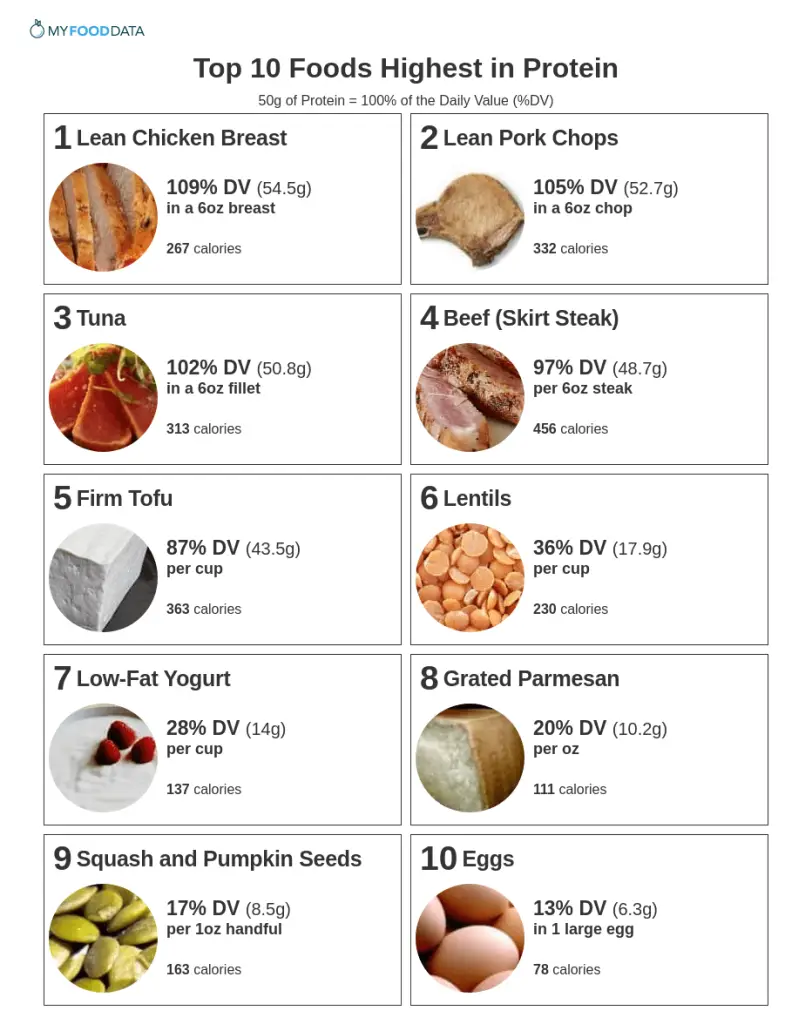
High-quality complete protein sources: Chicken breast (31g per 4oz), Greek yogurt (15-20g per cup), eggs (6g per egg), salmon (25g per 4oz), lean beef (26g per 4oz), cottage cheese (14g per half cup), turkey (26g per 4oz), and protein powder (whey, casein, or plant blends: 20-25g per scoop).
Plant-based considerations: Plant proteins often lack one or more essential amino acids and generally contain less protein per serving than animal sources. Vegetarian and vegan women building muscle should combine complementary plant proteins (rice and beans, hummus and whole grain bread) and consider slightly higher total protein targets (upper end of the 0.7-1.0g per pound range) to ensure adequate amino acid availability.
High-protein plant sources: Lentils (18g per cup cooked), chickpeas (15g per cup), tofu (20g per cup), tempeh (31g per cup), edamame (17g per cup), quinoa (8g per cup), and hemp seeds (10g per 3 tablespoons).
Protein powder isn’t necessary but provides convenient, concentrated protein when whole food sources are impractical. Choose whey or casein for complete amino acid profiles, or plant-based blends (pea, rice, hemp combinations) for vegetarian/vegan options. Here’s our top recommendation for the safest whey protein to consume.
Common Protein Mistakes Women Make
Mistake #1: Relying on Dinner as Primary Protein Source
Most women consume minimal protein at breakfast and lunch, then attempt to compensate with a large protein serving at dinner. This approach leaves your body without adequate amino acids for most of the day, limiting muscle protein synthesis during this extended period.
What you should do instead: Distribute protein more evenly. If you need 120g daily, aim for 30-40g at breakfast, lunch, and dinner, rather than 10g, 15g, and 95g.
Mistake #2: Overestimating Protein Content in Foods
Many foods marketed as “high protein” contain far less than assumed. A slice of bread, a handful of nuts, or a serving of pasta contributes some protein but insufficient amounts to meet muscle-building needs without dedicated protein sources at each meal.
What you should do instead: Track your intake for one week to establish accurate awareness of actual protein consumption. Most women discover they’re consuming 40-60% of their target intake.
Mistake #3: Restricting Calories Too Aggressively While Building Muscle
Attempting to build muscle while in a significant caloric deficit creates competing demands your body struggles to meet. Severe caloric restriction combined with strength training often results in muscle maintenance at best, not muscle building, regardless of protein intake.
What you should do instead: Maintain moderate caloric intake that supports training and recovery. Building muscle requires energy. Small caloric deficits (200-300 calories below maintenance) can work for beginners, but aggressive cutting undermines muscle building efforts.
Mistake #4: Assuming Protein Needs Remain Constant
Your protein requirements change as your training evolves and your body composition shifts. A woman with more muscle mass requires more protein to maintain that tissue, independent of training status.
What you should do instead: Reassess protein needs every 8-12 weeks as your body composition changes. The 0.7-1.0g per pound bodyweight guideline scales with you.
Practical Strategies for Meeting Protein Goals
Strategy #1: Start with Breakfast
Most women consume carbohydrate-heavy breakfasts (toast, cereal, pastries) with minimal protein. Adding 25-30g protein at breakfast immediately improves daily distribution and makes remaining targets more achievable. High-protein breakfast options: Greek yogurt with berries and granola (20-25g), three-egg omelet with vegetables and cheese (20-25g), protein smoothie with whey/plant protein, banana, and nut butter (25-30g), cottage cheese with fruit and nuts (20-25g), or overnight oats made with protein powder (25-30g). Prepare 2-3 protein sources weekly that reheat well and integrate into multiple meals. This removes the barrier of cooking protein from scratch for every meal. Here are some high-protein breakfast ideas you can use.

Strategy #2: Batch Prep Protein Sources
Batch prep options: Grilled chicken breast (portion into 4oz servings), hard-boiled eggs (grab-and-go protein), cooked ground turkey or beef (add to any meal), baked salmon or white fish (2-3 portions), or slow-cooker pulled chicken (versatile for various meals).
Strategy #3: Use Protein Powder Strategically
Protein powder isn’t a whole food replacement but provides convenient protein when cooking isn’t practical. One 25g scoop in a morning smoothie or afternoon shake significantly contributes to daily targets without meal prep. If choosing powder, opt for whey-based options which test significantly safer than plant-based. See our guide to the safest protein powders for brand recommendations.
Strategy #4: Plan Your Protein First
When planning meals, start with the protein source (chicken, fish, tofu, eggs) and build the meal around it, rather than treating protein as an afterthought to carbohydrate-centered dishes. If you’re also balancing endurance training with strength work, see our guide on how to combine gym and running for programming strategies that complement your nutrition approach.
Supplements: What’s Worth Considering
- Protein Powder: The only supplement consistently worth considering for most women. Provides convenient, high-quality protein when whole food options are impractical. Whey protein offers complete amino acids and rapid absorption. Plant-based blends (combining pea, rice, hemp) provide comparable benefits for vegetarian/vegan women.
- Creatine Monohydrate: Well-researched supplement that enhances strength performance and supports muscle building. Standard dose: 3-5g daily. Particularly beneficial for women as dietary creatine comes primarily from animal products, making vegetarian/vegan women more likely to have lower baseline levels.
- Essential Amino Acids (EAAs): May benefit women struggling to meet protein targets through food, but whole protein sources provide the same amino acids plus additional nutrients. Not necessary if total daily protein intake meets requirements.
- Unnecessary Supplements: BCAAs (redundant if consuming adequate total protein), collagen protein (incomplete amino acid profile for muscle building), and most proprietary muscle-building supplements (minimal evidence supporting their use).
Monitoring Progress and Adjusting Intake
Track your protein intake for one week to establish your current baseline. Most women discover a significant gap between current and optimal intake. Use a food tracking app or simple daily log noting protein at each meal. After implementing higher protein intake for 4-6 weeks, assess: Are you recovering better between training sessions? Are you seeing strength improvements in the gym? Is muscle definition improving? Are you less sore after workouts?If progress stalls despite adequate protein and consistent training, consider: Are you consuming enough total calories to support muscle building? Is your training program progressively overloading your muscles? Are you sleeping 7-9 hours consistently? Is stress management adequate?
For women new to strength training who want expert guidance on both training and nutrition strategies, the Core program provides personalized coaching that addresses the complete picture of muscle building. For those with variable schedules or who prefer remote training, the Virtu program delivers the same comprehensive approach with complete flexibility.
Your Implementation Plan
Building muscle requires adequate protein consistently, not just occasionally. Success comes from establishing sustainable habits rather than temporary dietary changes. Start by tracking current intake for one week to establish your baseline. Calculate your target based on bodyweight (0.7-1.0g per pound). Identify the gap between current and target intake. Then implement one change at a time: add protein to breakfast first, then improve lunch protein, then address distribution across meals. Focus on whole food protein sources primarily, using supplements strategically when convenient. Distribute protein across 3-4 meals rather than concentrating it in one meal. Track intake initially until you develop intuitive awareness of portion sizes and protein content. For women who want expert guidance on nutrition strategies that complement their training program, personalized coaching addresses both the training and nutritional components required for muscle building.
Book a free discovery call to discuss how customized coaching can help you optimize both training and nutrition for your goals.
FAQs About Protein for Building Muscle
Yes, but it requires more attention to protein intake and amino acid variety. Plant proteins generally contain less protein per serving and often lack one or more essential amino acids. Vegetarian/vegan women should target the higher end of protein recommendations (0.9-1.0g per pound bodyweight), combine complementary plant proteins throughout the day, and consider plant-based protein powder to help meet targets.
Protein itself doesn’t cause fat gain—excess calories do. Protein is actually the least likely macronutrient to be stored as fat and has a higher thermic effect (your body uses more energy digesting protein than carbs or fat). If you’re replacing other calories with protein rather than adding protein on top of existing intake, you’re unlikely to gain fat. In fact, higher protein intake often supports fat loss while maintaining muscle.
The “anabolic window” is wider than commonly believed. Consuming protein within 2-3 hours post-workout supports recovery effectively. If you train fasted or haven’t eaten in several hours pre-workout, post-workout protein becomes more important. If you ate a protein-rich meal 1-2 hours before training, immediate post-workout protein is less critical. Total daily protein intake matters more than precise timing.
For healthy women, protein intake up to 1.2g per pound bodyweight (roughly double the muscle-building recommendations) shows no adverse effects. Your body will use what it needs for muscle synthesis and other functions, converting excess to energy or excreting it. However, consuming substantially more than needed provides no additional benefit for muscle building and displaces other nutrients. The 0.7-1.0g per pound range provides optimal benefit without excess.
Adequate protein is necessary but not sufficient for muscle building. You also need: progressive overload in training (gradually increasing demands on muscles), adequate total caloric intake (difficult to build muscle in significant caloric deficits), sufficient recovery (muscles grow during rest, not training), and consistency over time (muscle building occurs gradually over months, not weeks).