Functional Strength Training: The Complete Guide
Functional strength training explained by a a functional strength coach: the 7 movement patterns, what the research actually shows on injury prevention and longevity, and how to program it whether you're a beginner or years into training.
Functional training has been resurfacing as a massive fitness trend, but the underlying concept has been around for decades. Long before it showed up in boutique studios and viral social media videos, it was already the baseline framework used in physical rehabilitation and high-performance athletic training. The functional approach to strength training is based on one simple fact: your body does not move one muscle at a time.
In everyday life, you squat to sit down, hinge to pick something up from the floor, push a heavy door open, pull a bag toward you, carry groceries across a parking lot, brace your core when moving under a sudden load, and rotate your body every time you reach or turn. Functional strength training builds those exact movement patterns on purpose. By prioritizing pattern mastery over muscle isolation, the strength you gain inside the gym transfers directly to your life outside of it.
That practical application is the primary differentiator between functional fitness and more traditional bodybuilding routines. Traditional weightlifting can absolutely build raw muscle mass and physical strength and in many cases, it remains the backbone of a solid program. Functional strength training uses those same core physiological principles, but organizes them around dynamic movement patterns and real-world tasks instead of fixed gym machines and isolated muscle groups.
This is the lens I use with clients in Toronto across beginner strength, running performance, and return-to-exercise coaching. The foundational patterns remain completely identical from person to person; it is simply the way you load and progress your body that changes based on your unique fitness history, injury background, and current athleticism.
What Is Functional Strength Training?
In the simplest terms, functional strength training is resistance training designed around the multi-joint movements needed for daily life, sport, and work, rather than individual muscles in isolation. It relies on compound exercises that teach multiple muscle groups to fire in perfect synchronization, with a major focus on coordination, balance, and core stability.
In practice, that means training your body to squat, hinge, push, pull, carry, rotate, and brace with absolute control under load, instead of targeting just one muscle on a gym machine. You are still building lean muscle and using the general progressive overload principles, but you are doing it through patterns that look more like the structural movements you perform every single day
Why It Suddenly Looks “New”
If the term “functional” seems to be everywhere right now, that is largely because the commercial fitness industry has turned a clinical methodology into a marketing buzzword. The core science is exactly what it’s always been. Teaching people to move well for their lives started with physical therapists and athletic coaches, not social media influencers.
Understanding that history matters because it keeps your training focused on exactly what is important, not fancy-looking workouts, but baseline movements that make you stronger, more resilient, and translational into your day-to-day activities.
What It Looks Like in Real Life
Real-world functional strength is what allows you to stand up from a low couch without relying on your hands for assistance, carry heavy bags through without feeling unstable, or lift something heavy from the floor without experiencing lower back pain. It isn’t defined by a specific piece of equipment or a boutique class brand. It is a simple process of deciding which physical movements matter most for your lifestyle, and then systematically building gradual strength and resistance for these movement patterns.
What Is Considered Functional Fitness?
The term ‘functional fitness’ gets used so loosely now that it covers a massive range of training styles. The problem is that they aren’t all equal. To figure out if an exercise is actually functional, you have to look past the branding and focus on the movement patterns and more importantly, how well they translate to the way you move every day.
Calisthenics
Bodyweight training comes closest to pure functional movement. It relies entirely on exercises like push-ups, pull-ups, squats, lunges, and planks to develop total-body control and help your muscles work together. The primary limitation of calisthenics is the ceiling on external loading. The main downside to bodyweight training is that you’ll eventually hit a plateau. To keep getting stronger, you have to start adding weight – especially for moves like hip hinges and carries, where you run out of ways to make the movement harder using just your own body.
Hyrox
Bodyweight training comes closest to pure functional movement. It relies entirely on exercises like push-ups, pull-ups, squats, lunges, and planks to develop total-body control and help your muscles work together. The primary limitation of calisthenics is the ceiling on external loading. The main downside to bodyweight training is that you’ll eventually hit a plateau. To keep getting stronger, you have to start adding weight – especially for moves like hip hinges and carries, where you run out of ways to make the movement harder using just your own body.
F45
F45 is more difficult to define structurally because the training stimulus shifts completely from class to class. Some weekly blocks are programmed with great functional fitness templates that focus heavily on the main movement patterns. Other blocks go much deeper into high-speed circuits or cardio-based sessions. Whether a specific class counts as functional training or not depends on the workout.
HIIT
High-Intensity Interval Training (HIIT) is not a distinct training method or exercise philosophy—it is simply a work-to-rest structural protocol. What matters most for your body is what exercises fill those intense work intervals. A HIIT circuit built around squats, carries, presses, and rows will actively support functional strength. A HIIT circuit filled with heavy bicep curls and seated leg extensions is still just isolated strength training performed at an elevated heart rate; it will include muscle gain benefits, but not directly translational into functional movement quality.
CrossFit
CrossFit is built on the same core ideas: doing functional movements at high intensity. It leans heavily on big compound lifts and mixed conditioning, which is great for building real-world capability. The major difference is that CrossFit prioritizes speed, high reps, and variety much more than a structured functional strength program does. It’s an incredible tool for people who are already moving well and want to be pushed hard, but it’s rarely the best starting point for beginners who are still trying to build strong foundational movement patterns.
Why Functional Strength Matters
The true goal of functional training isn’t just to lift heavier weights, it’s to make your daily life easier. By focusing on how your body actually moves, you’re building a foundation that makes everything from sports to errands feel natural and automatic, all while keeping you strong and capable as you age.
Everyday Movement Feels Easier
Functional training coordinates your joints and supporting muscle groups to distribute force evenly. You’ll notice the payoff in your day-to-day life: stairs don’t wear your legs out as fast, carrying heavy groceries feels easier, and standing all day doesn’t hurt your lower back. For most of my clients, that’s the real win from functional strength training. It’s not about just looking stronger, it’s also about feeling capable in your own body.
Postural Control and Fall Prevention
Because functional exercises force you to move in different directions while managing your center of gravity, they are the single most effective tool for building balance, structural coordination, and rapid stabilizing reflexes. This spatial awareness is very crucial whether your goal is trail running across uneven terrain, moving better through life or aging in a healthy strong way.
Long-Term Health and Longevity
Strength training is the ultimate tool for keeping your independence as you age; it builds the muscle and bone density you need to stay active. When you train functionally, you’re basically practicing for your future. You’re mastering the exact moves you’ll still need to do decades from now—like rising from the floor, carrying loads, and keeping your balance.
Progressive strength training does more than just reshape your muscles – it changes how you carry yourself, how stable you feel under load, and how resilient your body stays over time. I’ve talked about this in Women’s Health and Fit & Well – that intentional strength training is the best way to shift posture, build confidence, and grow your long-term capacity. The same goes for endurance: you don’t need to overhaul your entire daily schedule to see results. Even simple habits, like picking up your walking pace, give your bones, circulation, and energy levels a meaningful boost.
Injury Prevention
The data for this movement-first approach to training is very strong. Programs that build hip, core, and landing mechanics – the same work in this guide, cut ACL injury risk by 25% to 54%. Research on female athletes shows a 50% reduction in non-contact injuries. The FIFA 11+ program, which uses these stabilization principles, cuts injury rates by 30% to 46%. It varies by sport and age, but the benefit is clear.
The same applies to lower back pain. Research shows that core resistance training creates the best, most lasting improvements, beating out cardio or stretching. The key is anti-rotation and anti-extension work – teaching your body to resist movement. That’s why we focus on “bracing” in this guide, not sit-ups. These benefits don’t come from traditional strength work. They come from the multi-planar movement and landing mechanics you won’t get from a leg press or a knee extension machine.
Functional Strength vs Traditional Strength Training
While traditional bodybuilding and functional strength training use the same foundational mechanisms – mechanical tension, progressive overload, and repetitive practice, their ultimate goals are completely different. Traditional lifting prioritizes muscle size, hypertrophy or maximal strength lifting. Functional strength training prioritizes how effectively that developed strength transfers into real-world movement: bending, carrying, stabilizing, and rotating with full joint control.
What Traditional Strength Training Emphasizes
A standard bodybuilding split is typically organized around:
Isolated muscle groups or “body-part” splits (e.g., Chest Day, Back Day, Leg Day).
Higher use of isolation machines and standard barbell lifts.
Straight sets focused entirely on maximizing load and volume.
The way to measure success and progress in traditional strength training is by looking at how much weight is on the bar, How many sets and reps you can complete or Are your muscles growing in size? The focus is on lean muscle mass gain, but unless you program some dynamic, compounded movements into your traditional weightlifting training, the gained muscle mass will not translate into more controlled, more flexible or higher quality functional movements.
What Functional Strength Training Emphasizes
Rather than obsessing over individual muscles, a functional framework is built around the fundamental movement patterns that drive your daily life:
Squat and Lunge: Builds the power you need to stand up, climb stairs, and stay steady on one leg.
Hinge: Keeps your lower back safe whenever you need to lift things off the floor.
Push and Pull: Boosts your pressing and rowing strength while keeping your shoulders healthy.
Carry: Improves your grip and core stability, making it easier to walk while hauling weight.
Rotate and Brace: Keeps your core locked in when you’re moving or getting pulled off balance.
In this paradigm, the primary success metrics shift: Can you execute a hip hinge without your lower back doing all the work? Can you carry an uneven load without your posture collapsing? Do your single-leg stabilizers match the demands of your running stride or sport?
You’ll still track your sets, reps, and weights, but the real test is simpler: Are you moving, performing, and feeling better in your daily life? That’s what matters, not just whether the weight on the bar is increasing.
Traditional vs. Functional Strength Training in Practice
To understand how these training styles translate to real-world movement, compare how they target the same major muscle groups:
Muscle Group
Functional Strength Approach
Traditional Strength Approach
Chest / Pressing
Push-up: Pressing your own body weight, forcing your shoulders, core, and hips to actively brace for alignment.
Chest Press Machine: Using a fixed-path press where your torso is artificially supported by a back pad.
Core Stability
Seated Crunch Machine: Flexing the spine forward against a weight stack to target abdominal muscles.
Seated Crunch Machine: Flexing the spine forward against a weight stack to target abdominal muscles.
Back / Pulling
Single-Arm Row / Pull-up: Pulling while resisting rotation (row) or moving your full body weight (pull-up) to link strength to posture.
Lat Pulldown: Pulling a bar while your thighs are locked in place under roller pads, isolating the lats.
Quads / Front of Leg
Leg Extension: Sitting flat and straightening your knees against a roller pad to load the quads in total isolation.
Goblet Squat to Box: Standing up and sitting down under load to force your hips, knees, and core to coordinate for stairs or deep chairs.
Hamstrings & Glutes
Romanian Deadlift (RDL): Hinging at the hips with a stable torso to train the back of the leg to lift loads safely.
Leg Curl: Flexing the knee against a fixed pad while your upper body and hips stay anchored and passive.
Which One Is Better?
Both resistance training styles have their place. However, a study published in MHSalud found that while both build raw strength, functional training is roughly 1.7 to 3.3 times more effective at improving cardiovascular capacity, agility, and lower-body power.
If your goals are performance, pain-free movement, and being able to react quickly to external forces, functional training is the clear winner. A well-rounded fitness program doesn’t treat these as separate. It blends them, using compound functional movements as the foundation and isolation lifts to address specific weak points or increase muscle strength.
The Movement Patterns Behind Functional Strength
This is the core of your training. Instead of splitting your training by body parts, your sessions are built around the universal movement patterns that dictate how we move. Each of these can be scaled from beginner to advanced.
1. The Squat
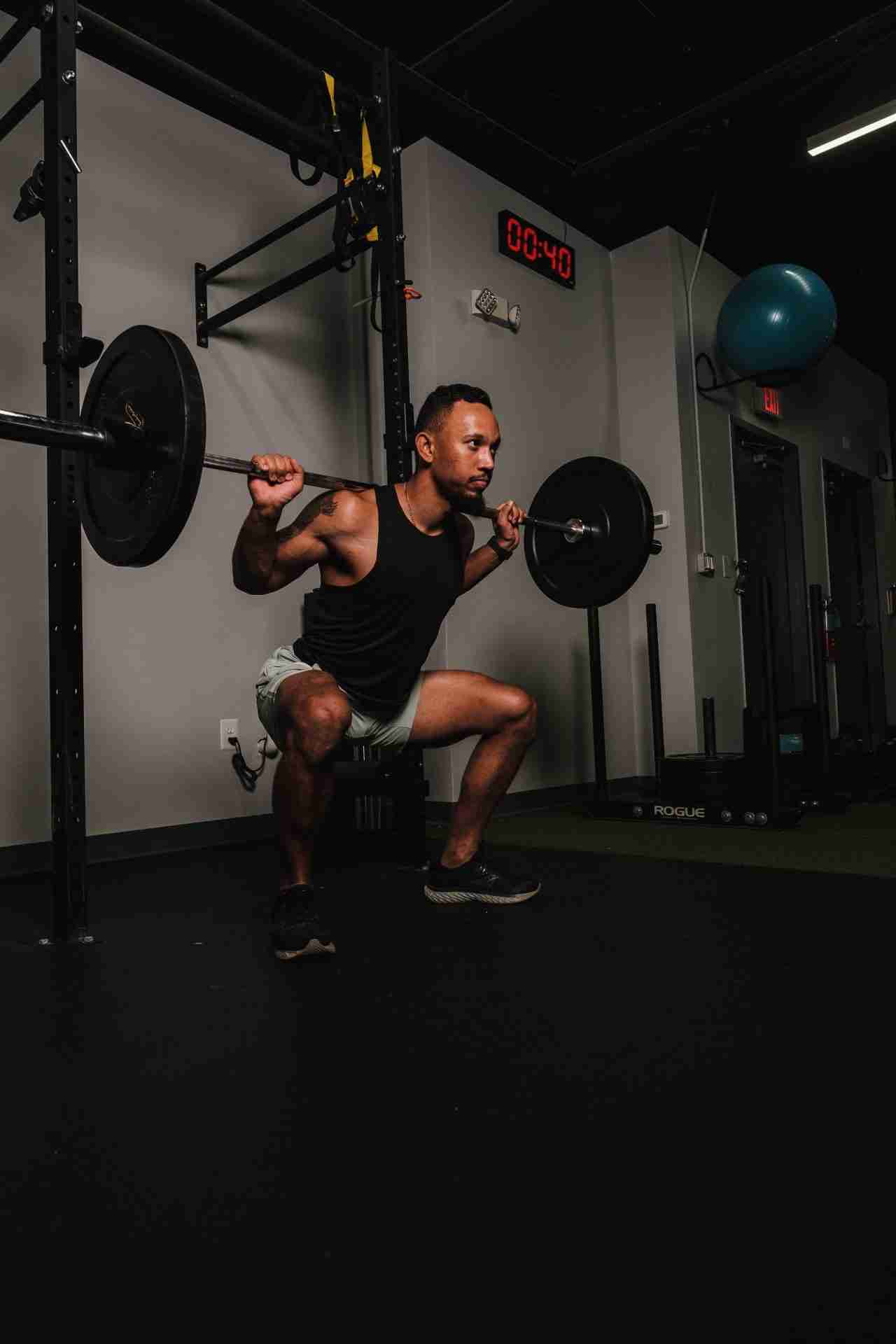
The squat covers sitting, standing, and controlling your center of gravity. It’s the engine for using stairs, rising from chairs, and lowering yourself to pick things up. It’s a great way to see how your hips, knees, and core coordinate under load.
Why It’s Functional: These patterns map directly to “up-and-down” daily tasks and keep your knees and hips healthy for the long term.
2. The Hinge
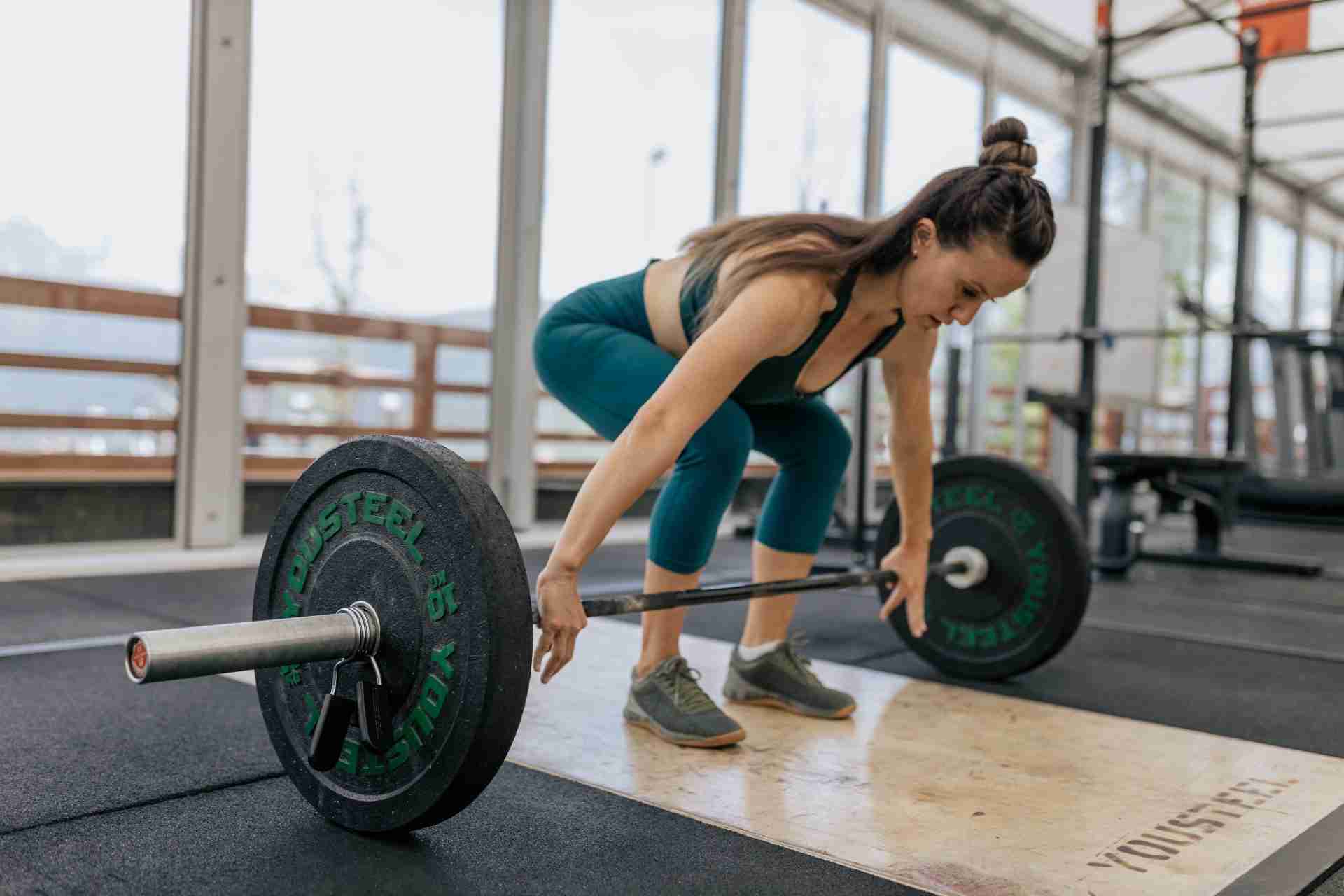
The hip hinge is bending at the waist while keeping your spine neutral. It allows you to lift heavy things or lean forward without dumping all the force into your lower back.
Why It’s Functional: These movements train your glutes, hamstrings, and deep core to share the load. They mirror how you reach down for a box or push off during a run.
3. The Push
Push patterns involve moving weight away from your torso, horizontally or vertically. They build upper-body power and teach your shoulders, chest, and core to stabilize as a unit.
Why It’s Functional: Unlike machines, free pressing requires shoulder and core control. It mimics pushing open a heavy door or lifting items overhead.
4. The Pull
Pull patterns bring resistance toward your body. These are great for opening up your posture if you’re stuck at a desk all day or spend hours daily hunched over laptops and phones.
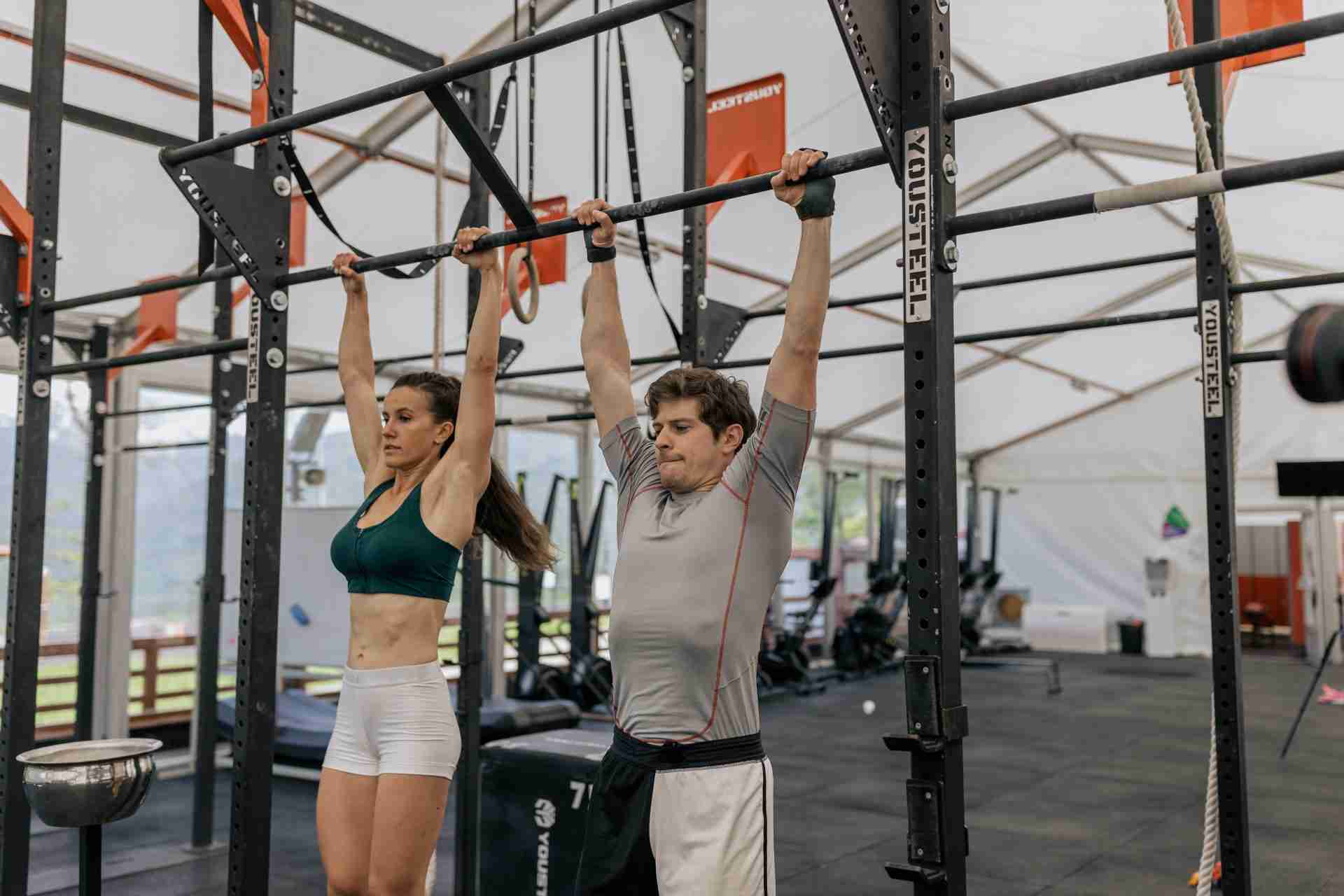
Why It’s Functional: Rows and pulldowns keep your upper back and posture tall. Advanced moves like the pull-up require you to move your own body mass by coordinating your grip, shoulders, and core.
5. The Carry
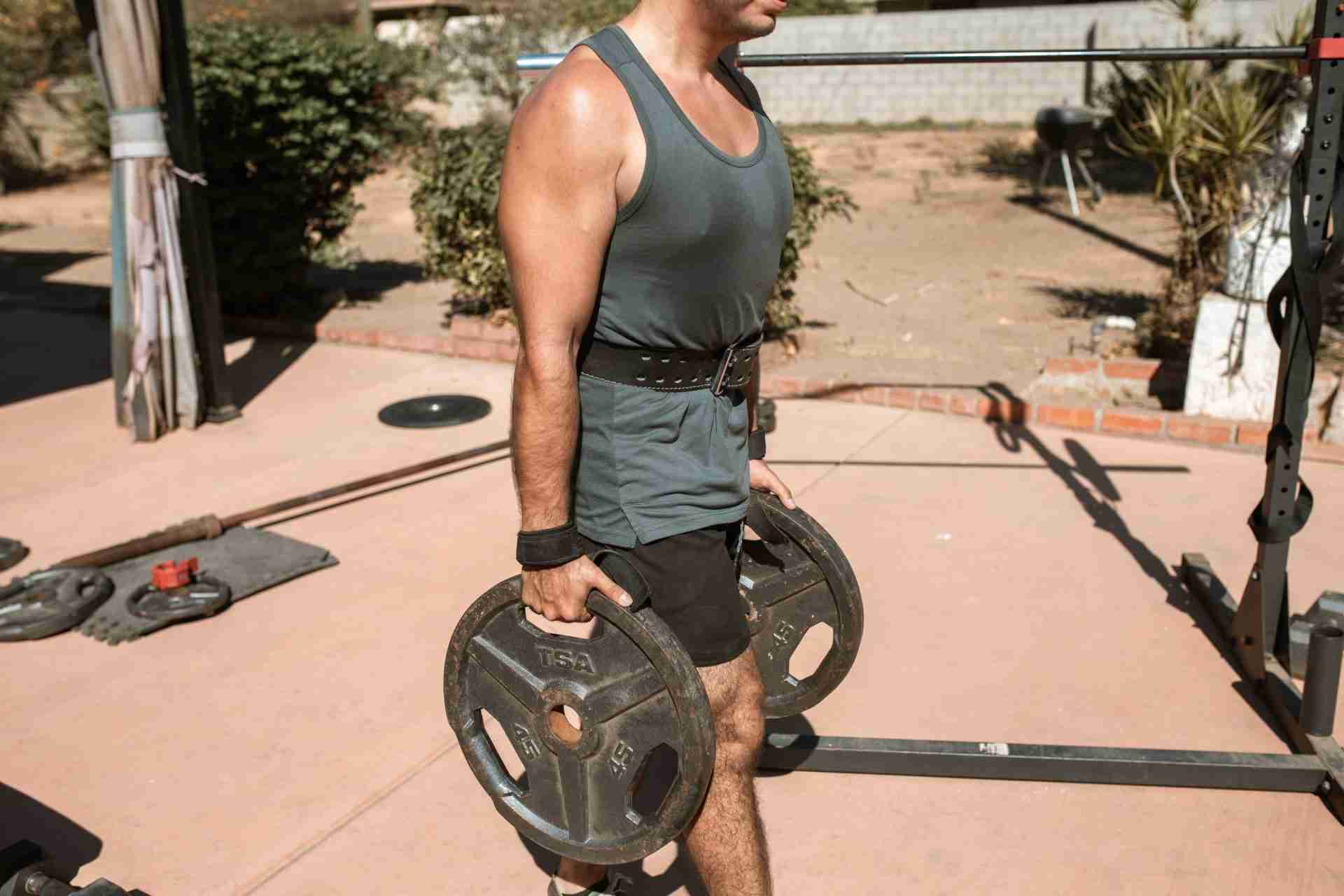
Carries require walking under load while maintaining spinal alignment. They force your grip, shoulders, core, and hips to work as one cohesive unit.
Why It’s Functional: Carries blend loaded walking, posture, and grip strength. Grip strength is a primary biomarker of aging – carries boost this while challenging your entire frame. I treat grip strength as more than just forearm work; it’s a direct indicator of whether your nervous system and muscle mass are supporting the real-world tasks you’ll encounter as you age.
6. Rotate and Anti-Rotate
Rotation is your ability to twist; anti-rotation is your ability to resist that twist. Life is rotational—checking a blind spot, reaching into the backseat of a car, or changing directions on a run.
Why It’s Functional: These train your core, hips, and shoulders to transfer rotational power safely, protecting your spine from uneven loads.
7. The Brace
Bracing is stabilizing your trunk while your limbs produce force. This is what core strength actually means: locking down your midsection so power transfers efficiently between upper and lower body. We focus on resisting movement rather than doing endless sit-ups.
Why It’s Functional: Bracing protects your spine during carries, runs, and daily lifts. I use these movements to verify if a client’s core strength is translating into real-world posture and independent mobility.
How to Build Functional Strength in the Gym
How Often to Train
Most people get great results with two to four sessions a week. Aim to hit your major patterns at least twice. I start beginners on a 2-day full-body split, only adding a 3rd or 4th day if you’re recovering well and are ready for more volume.
Building Your Workouts
A balanced session should hit every main movement pattern and has at least a few of these:
One Squat or Lunge
One Hinge
One Push
One Pull
One Carry or Anti-Rotation move
One Bracing drill
Change up the exercises if you want, but keep the same principles: hit 2-3 patters at time, or all at once depending on how much volume you want, track your weights and reps, and repeat.
How to Progress
When you’re ready to make workouts harder, only change one thing at a time:
Load: Add a little bit of weight.
Volume: Add a rep or an extra set.
Tempo: Slow down the movement or add a pause at the bottom.
Variation: Switch from a two-sided lift to a single-leg or single-arm version.
If your form starts to fall apart, you’ve moved too fast. True progress is a controlled step that makes you stronger without losing your technique.
Keep It Simple
Functional training isn’t about wobbly surfaces or gimmicks. The best athletes just do the basics incredibly well. Squats, hinges, pushes, pulls, carries, and bracing done with control will always beat a fancy workout done poorly.
Training at Home
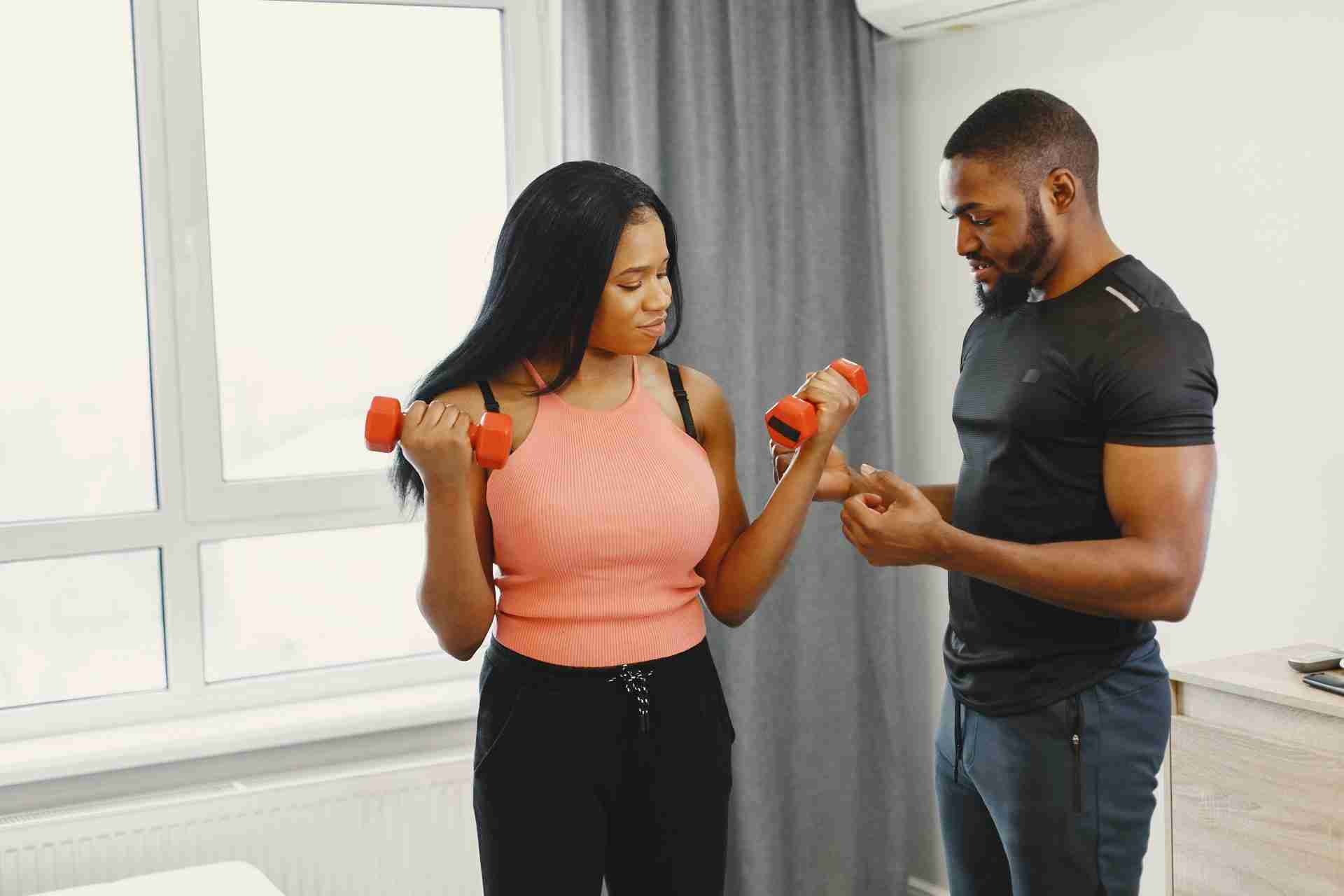
The same rules apply at home. You can build high-quality sessions with bodyweight, resistance bands, and a pair of dumbbells. Setting up a space to train this way? I wrote up exactly what I recommend to clients in my home gym setup guide.
Testing Your Progress: Functional Benchmarks
If you want to know if your training is working, you need to test your movement quality. These benchmarks aren’t about PRs, they’re about checking whether your body moves in a coordinated, controlled and strong way. Use these every few months to see if your training is translating to real-world function.
Movement Foundations (Basic Tests)
Sit-to-Stand (Squat Test)
Set a bench or chair to knee height. Cross your arms over your chest and sit down and stand up as many times as you can in 60 seconds with total control.
Goal: 25+ reps with a steady tempo. If you have to “drop” into the seat or use your arms for momentum, focus on your squat mechanics.
Forearm Plank (Bracing Test)
Hold a strict forearm plank. Your elbows should be under your shoulders, and your glutes and abs should be fully squeezed.
Goal: 90 seconds of pure tension. If you can hold it for 3 minutes but your lower back starts to ache after 45 seconds, the test is over. We care about tension, not just time.
Single-Leg Hinge (Stability Test)
Stand on one leg. Hinge at your hips and reach your hands toward your knee while keeping your back flat. Return to standing without putting your foot down.
Goal: 8-10 clean, balanced reps on each side. If you are wobbling to the side, your single-leg stabilizers need more work before you add heavy weight.
Advanced Capability (Elite Tests)
The Heavy Carry Test
Pick up two heavy dumbbells or kettlebells—ideally, each weight should be 25–30% of your body weight. Walk as far as you can until your grip fails or your posture breaks (shoulders rounding or torso leaning).
Goal: 60 seconds of walking with perfect, upright posture. This proves your grip, core, and shoulders can handle significant stress while you’re in motion.
The Single-Leg Squat Test
Stand on one leg and squat down until your thigh is parallel to the floor, then stand back up while keeping the other leg off the ground the entire time.
Goal: 5 clean reps per side without your knee caving in. This is the ultimate test of lower-body control and balance.
Who Functional Strength Training Is For
Functional strength training is universal, but how we use it depends on your specific goals. Here is how I adjust the focus for different needs:
Women Across All Fitness Levels
If you’re new to lifting, the goal is to build physical confidence so daily life feels easier. In the first few weeks, we focus on bodyweight patterns (squats, push-ups, rows, and planks) to teach your muscles how to work together. By weeks 4 to 6, we start adding weight. By weeks 6 to 8, you’ll start noticing real changes in your posture and muscle tone.
Weight lifting becomes especially important if you’re going through perimenopause or menopause, and here’s why: declining estrogen speeds up both muscle loss and bone loss at the same time, which is a combination that starts to happen only around that stage in life.
Bone loss in particular accelerates hard during this transition. Some research puts it at up to 20% of a woman’s total lifetime bone loss happening during the menopause transition specifically. As Dr. May Al-Araji of Mayo Clinic puts it, “weight-resistance exercises are really key for bone health” during this window, because loading the skeleton is one of the few things that actually signals bone to rebuild rather than just slow its decline.
The muscle side compounds the bone problem. The decline in estrogen means faster muscle loss (sarcopenia), and since muscle is metabolically active tissue, losing it is also part of why metabolism slows and fat tends to redistribute to the midsection during this stage.
Resistance training is one of the few interventions that deals with both problems simultaneously: it signals bone to stay dense and gives muscle the stimulus it needs to grow.
For runners, it’s not about lifting big weights; it’s about single-leg stability and pelvic control. This translates directly to pain-free long runs and a more powerful stride. Research shows that adding strength work improves running economy and lets you hold your pace longer without getting tired. If you’re just getting started, my feature on Fit & Well covers the 8-week transition from walking to running.
Older Adults
For older adults, this training is about staying independent. It’s about being able to get off the floor, climb stairs, and carry your own groceries. Resistance training is proven to improve leg strength and walking speed, the keys to staying mobile. Simple, chair-based drills create real change when done consistently. Check out my features on bodyweight strength tests after 55 and chair exercises for hip and glute strength over 60.
A weak grip doesn’t just mean tired forearms. It’s an early signal of muscle loss, nerve decline, and rising fall risk
Returning to exercise postpartum requires a patient, step-by-step strategy. The movement patterns stay the same, but we prioritize pelvic floor health, breathing, and recovery before adding intensity. The goal is to rebuild your capacity at a pace that respects your body’s healing process.
People returning from injury
If you’re coming back from an injury, we stop chasing old personal bests and focus on movement quality. The goal is to trust your body again, fix your form, and slowly re-introduce load.
While this style of training helps almost everyone, there are two specific cases where it shouldn’t be your focus.
First, if you are a competitive powerlifter or Olympic lifter, you need extreme specificity during your peak season. You can use functional training as an off-season baseline, but during competition prep, follow the plan designed for your specific sport.
Second, if you are in early recovery from surgery or a severe acute injury, focus entirely on the single-joint isolation work your physiotherapist assigned. Compound, multi-directional moves can wait until you are fully cleared to move again.
What Equipment To Use
Master your bodyweight first. If you can’t control your own mass through a full squat or hinge, adding weight just compounds your compensations and increases injury risk.
Dumbbells: Independent movement paths. Use Opposite-Side (Contralateral) Loading (weight in the left hand for a right-leg RDL) to force your core stabilizers to work harder to resist rotation.
Kettlebells: Offset center of mass forces your stabilizers to work harder. They’re excellent for explosive power and grip strength, though they have limitations for micro-loading compared to barbells.
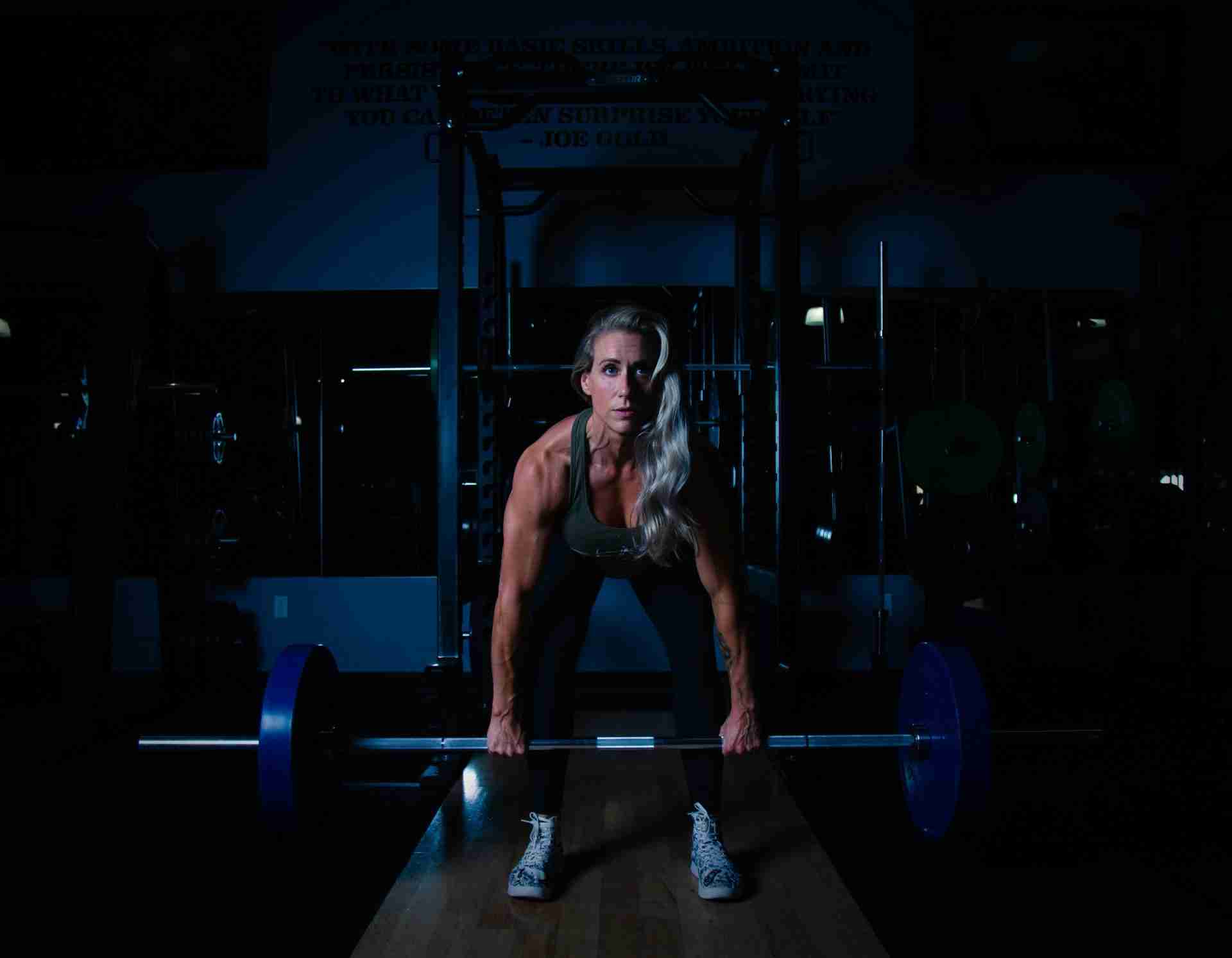
Barbells: The best tool for maximal structural strength once you’ve mastered the patterns.
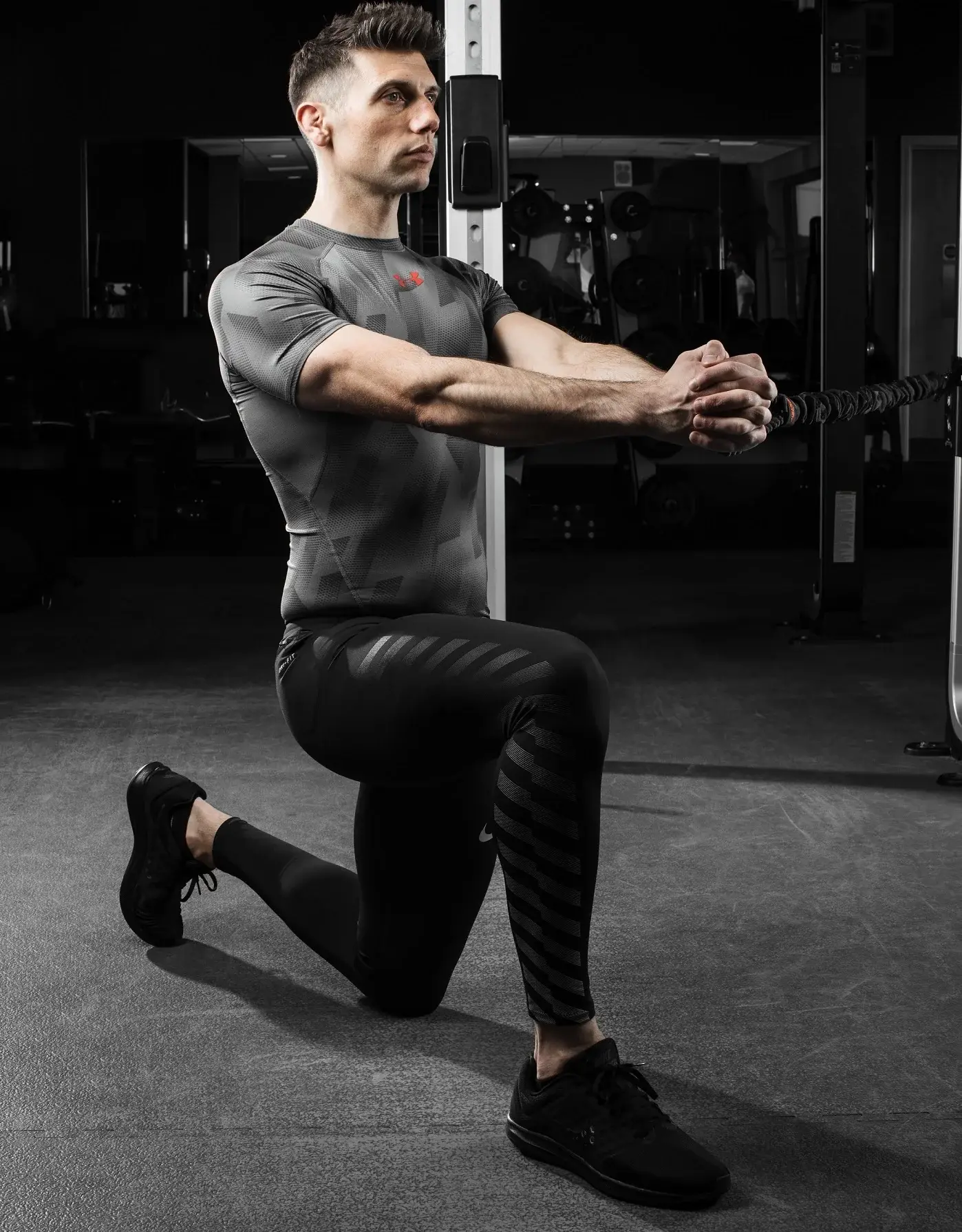
Bands/Cables: Essential for rotation/anti-rotation. Unlike gravity-based weights, they provide constant tension through the entire range of motion.
Sandbags: The shifting weight forces your stabilizers to adjust continuously. This builds rugged, real-world core strength.
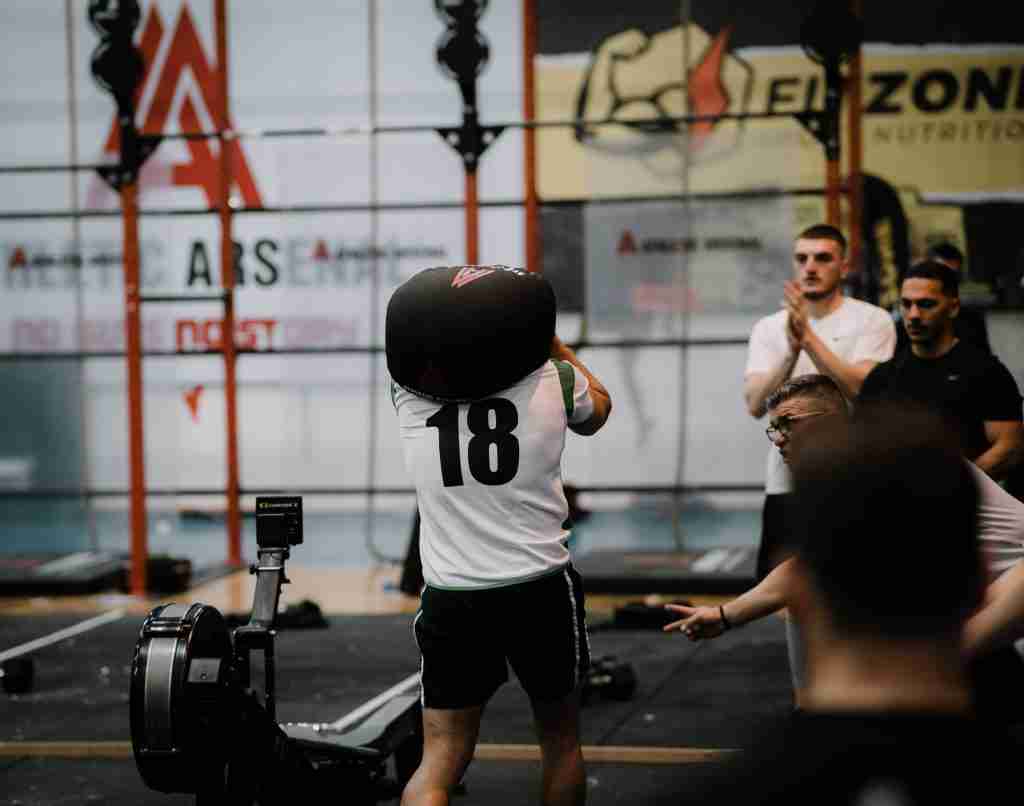
Sandbags are an advanced tool due to their unstable nature which demands a level of core and stabilizer control that’s best introduced once your foundational patterns are already locked in. Source: Pexels
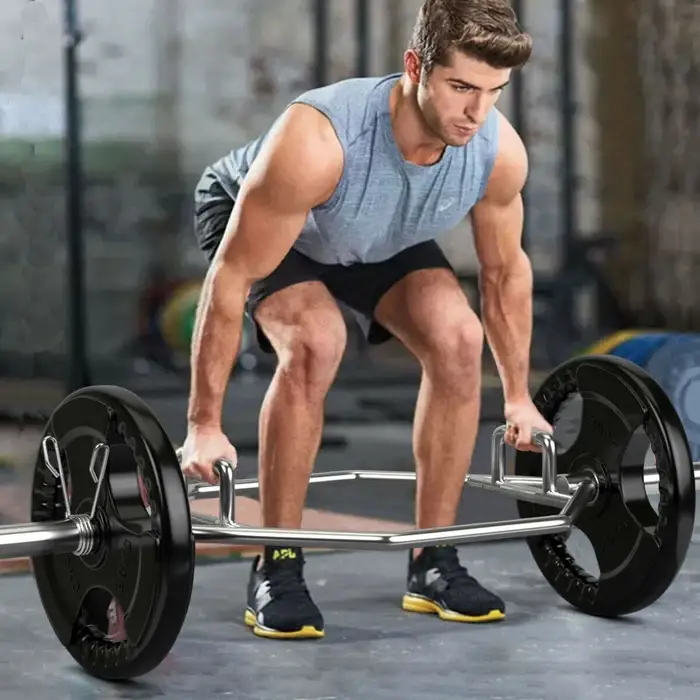
The trap bar is a good choice for beginners and intermediates since the load sits at your center of mass instead of out in front of you. Source: Pexels
The Functional Engine: Pair Strength with Cardio
True functional capability isn’t just structural strength. It’s whether your heart and lungs can keep up with what your muscles can now do. This is not tied to just performance, but to longevity too.
This is where cardio becomes a longevity question, not just a performance one.
Cardiorespiratory fitness is one of the most consistently studied predictors of how long people live. Research spanning decades has tied higher fitness levels to meaningfully longer life expectancy, and the relationship holds even after accounting for age, weight, and existing health conditions.
It’s also one of the few longevity levers you can actually train, at any age.
How to Combine Functional Strength & Cardio
So what’s the best way to get the benefit of both?
Pair your 2-3 weekly strength sessions with low-intensity, conversational-pace cardio (often called Zone 2 – roughly 60-70% of max heart rate, the pace where you can still talk in full sentences) to build an aerobic base, plus 1-2x per week HIIT sessions to push your adaptations once you master the fundamentals.
Strength alone is not enough to build longevity. This is why VO2 max is one of the biomarkers I test for in my longevity coaching work.
Functional strength gets you moving well and superior cardiovascular fitness extends how many years you get to keep moving that well.
“Functional” doesn’t mean it has to be a hard varied circuit. A session that leaves you completely gassed out but doesn’t improve your squat, hinge, or carry hasn’t improve anything functionally, even if the burn from it was real.
Functional training can be MICT (moderate-intensity continuous training) or HIIT (high-intensity interval training), it all depends on how you structure it. Nail the basics of movement first then start gradually adding more high intensity work.
A few more common mistakes when it comes to functional strength training:
Skipping unilateral work. Walking, climbing stairs, cutting to one side, catching yourself when you trip. None of that happens with both legs working together at the same time. If every squat and every lift in your program is two-legged, you are not training to address muscle imbalances that bilateral movements can hide and you’re limiting how translational your gym gains can be to your real life.
Calling any ab exercise “core training.” Sit-ups train spinal flexion. Real core function is anti-rotation and anti-extension — resisting movement, not creating it. A strong “core” by sit-up standards can still fail the moment it’s asked to stabilize under an offset load.
Load added before the pattern is controlled.If your hip hinge already breaks down with nothing but your own bodyweight – your lower back rounding, your knees doing the work your hips should be doing, loading the movement with barbell doesn’t correct any of that and can increase risk of injury.
Never progressing anything on purpose. Doing the same weight, same reps, and same exercises month after month and calling it a routine isn’t training, it’s maintenance at best. Your body only adapts when the load on it gets slightly harder every time. This can be more weight, slower reps, less rest between sets, a longer carry.
Random splits with no connection to the person’s goal. A runner spending their whole gym session on a bodybuilding-style chest and arm day. A beginner walking into a CrossFit class when they don’t have basics means the benefit they will get out of strength training will be limited. Start with the movement-first mindset. What am I training for and what kind of movements that I do repetitively that I can bring into the gym with load?
Rushing the rep. This one isn’t just a beginner mistake, it shows up at every level. Moving fast through a squat or a row lets momentum carry the weight instead of your muscles doing the work. You get through the set, technically, but you haven’t actually trained anything — the muscles that were supposed to be under tension barely fired.
Confusing “functional” with “unstable surface.” Standing on a BOSU ball or a wobble board can genuinely improve balance and coordination. The mistake though is treating it as a replacement for loaded strength work, or assuming it’s automatically “more functional” just because it’s harder. Day to day life rarely demands you to squat on an unstable surface under load; it demands you to squat well under a heavy load (albeit stable, maybe not) like carrying something or lifting something. Balance training and strength training are both useful, they’re just different skills, and swapping one for the other doesn’t make your squat any stronger.
Favouring variety over mastery. Continuously adding new exercises so the workout doesnt feel boring may feel productive but without repetition of the basic foundational movements, your movement pattern will not improve .This is close to the “random circuit” problem, but it’s a different mistake. This one’s about novelty for its own sake, not about intensity.
Ignoring the eccentric phase. Most people only care about the “up” part of a lift meaning standing up out of a squat, pulling a weight up and let the “down” part happen fast and uncontrolled. That matters more than it sounds: research on ACL injury mechanisms has found roughly 70% of tears happen during deceleration, not while accelerating. A large study pooling over 12,500 people found muscle is naturally about 40% stronger eccentrically than concentrically, so most people are under-trained on exactly the side of the movement that matters most for injury risk. If you never train the slow, controlled lowering phase, you’re leaving the higher-risk half of the movement unpracticed.
FAQs
It’s resistance training built around the movement patterns your body actually uses in daily life and sport like squat, hinge, push, pull, carry, rotate, and brace, instead of isolating individual muscles on a machine. You’re still building strength and using progressive overload, but the exercises are chosen for how well they transfer, not just how much they can isolate.
Not exactly. You can lift weights in a way that’s fully isolated (a machine leg curl) or fully functional (a loaded carry). The equipment doesn’t decide which one it is, the movement pattern does.
Master the pattern with your bodyweight first, then add load gradually. Add more weight, more reps, slow the tempo, or add a single-leg version, one variable at a time. There’s no shortcut version of this, whether you’re doing it in a gym or with two dumbbells in a condo den.
Yes and usually better than expected, since these patterns are the foundation everything else gets built on anyway. Start with bodyweight, add load once the pattern is clean.
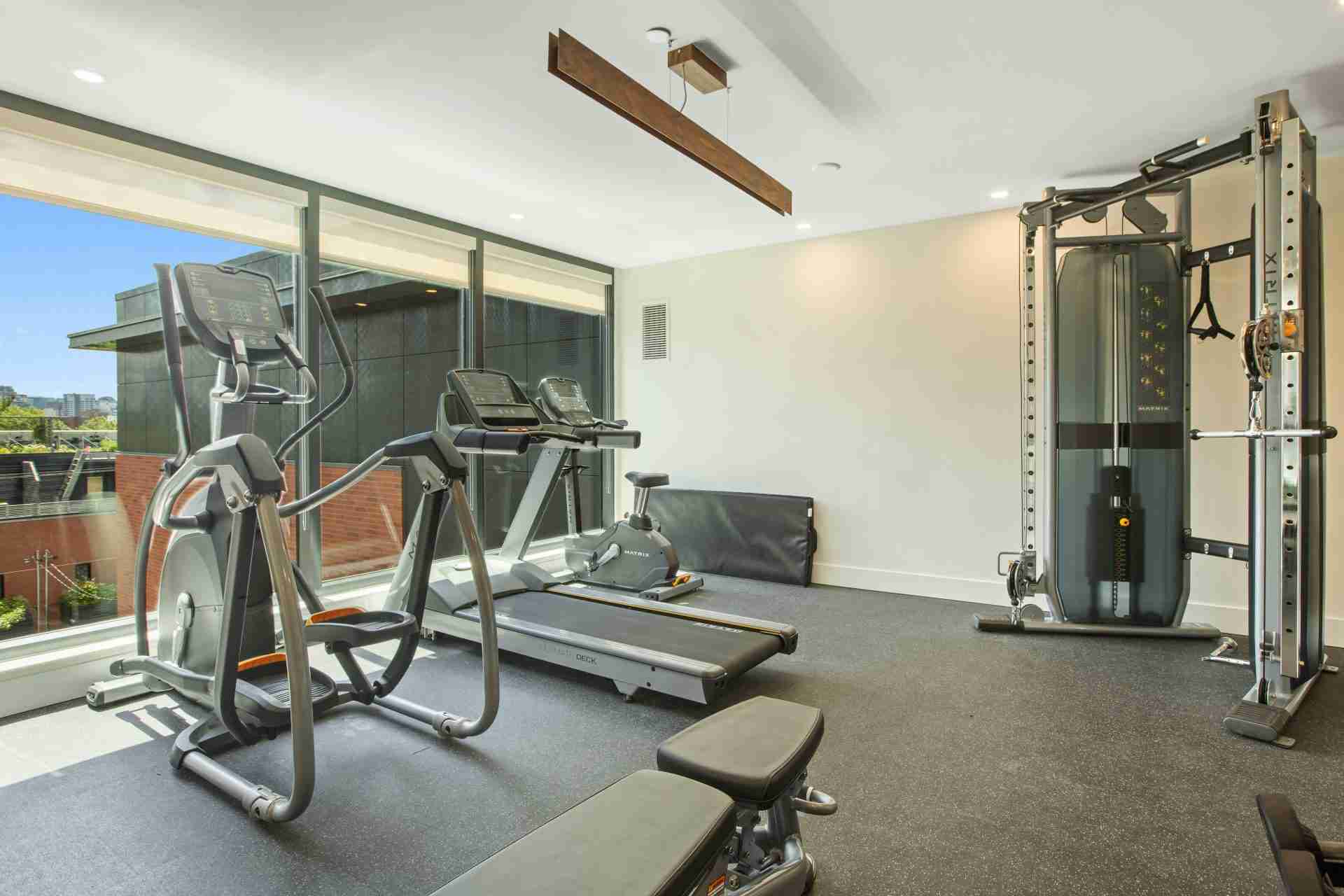
Treadmill or elliptical — both machines are cardio staples, but the right choice depends on your goals, injury history, and training phase. Here’s how to decide which one actually belongs in your routine.
Most people think they need a full gym to train at home. They don’t. Here’s exactly what our in-home personal trainers recommend to have ready before your first session.
Most women who start lifting aren’t trying to look like a bodybuilder. They want to feel stronger, move better, and see their body actually change. Here’s what the muscle-building equation actually looks like. Learn more about training, nutrition, hormones, and the timeline that’s often not talked about.
Marwa Ahmed is a certified functional strength and running coach, and founder of The BodyMind Coach, a Toronto-based coaching practice specializing in functional strength, endurance and longevity training. An Ironman triathlete herself and a MMA fighter, she’s been featured in Women’s Health, Men’s Journal, Fit&Well, and Prevention. She works with clients in person and remotely across Canada, the US, and the Middle East
Full Bio
Want to stay updated with us?
Get our latest articles about functional strength, building endurance for running and creating longevity tips
Websites store cookies to enhance functionality and personalise your experience. You can manage your preferences, but blocking some cookies may impact site performance and services.
Essential cookies enable basic functions and are necessary for the proper function of the website.
Name
Description
Duration
Cookie Preferences
This cookie is used to store the user's cookie consent preferences.
30 days
These cookies are needed for adding comments on this website.
Name
Description
Duration
comment_author_email
Used to track the user across multiple sessions.
Session
comment_author_url
Used to track the user across multiple sessions.
Session
comment_author
Used to track the user across multiple sessions.
Session
Statistics cookies collect information anonymously. This information helps us understand how visitors use our website.
Google Analytics is a powerful tool that tracks and analyzes website traffic for informed marketing decisions.
Used by Google Analytics to determine which links on a page are being clicked
30 seconds
_ga_
ID used to identify users
2 years
_gid
ID used to identify users for 24 hours after last activity
24 hours
_gat
Used to monitor number of Google Analytics server requests when using Google Tag Manager
1 minute
__utmb
Used to distinguish new sessions and visits. This cookie is set when the GA.js javascript library is loaded and there is no existing __utmb cookie. The cookie is updated every time data is sent to the Google Analytics server.
30 minutes after last activity
__utmc
Used only with old Urchin versions of Google Analytics and not with GA.js. Was used to distinguish between new sessions and visits at the end of a session.
End of session (browser)
__utmz
Contains information about the traffic source or campaign that directed user to the website. The cookie is set when the GA.js javascript is loaded and updated when data is sent to the Google Anaytics server
6 months after last activity
__utmv
Contains custom information set by the web developer via the _setCustomVar method in Google Analytics. This cookie is updated every time new data is sent to the Google Analytics server.
2 years after last activity
__utmx
Used to determine whether a user is included in an A / B or Multivariate test.
18 months
_gac_
Contains information related to marketing campaigns of the user. These are shared with Google AdWords / Google Ads when the Google Ads and Google Analytics accounts are linked together.
90 days
__utma
ID used to identify users and sessions
2 years after last activity
__utmt
Used to monitor number of Google Analytics server requests
10 minutes
You can find more information in our Privacy Policy and .