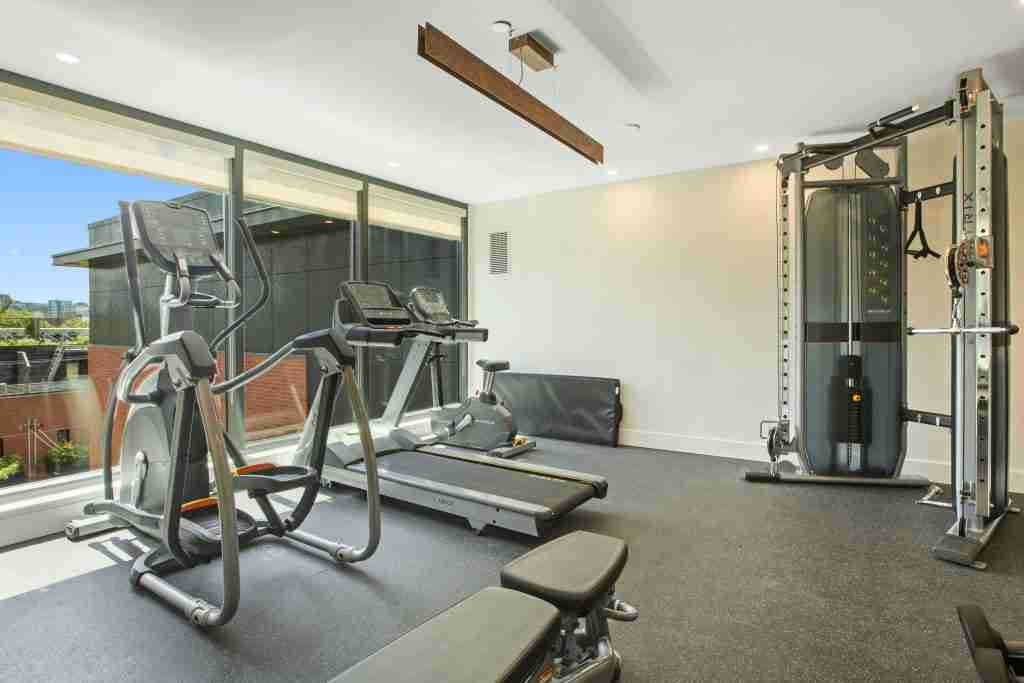
Band Distraction Stretching: The Mobility Tool Most Lifters Miss
Stretching vs. Mobility vs. Band Distraction
Most people use the words stretching and mobility interchangeably, but they describe different systems in the body. Stretching focuses on the muscles and soft tissues. Mobility describes the joint’s ability to move freely through its intended range.
You can have flexible muscles and still feel tight, especially if the joints themselves are restricted. That’s where band distraction comes in. Band distraction is a method of mobility training that uses a resistance band to apply gentle traction on a joint, slightly separating the joint surfaces. This controlled pulling force — called joint distraction — reduces compression, restores smooth glide, and allows surrounding muscles to move without restriction.
In other words:
Static stretching improves flexibility by acting on muscle length and neural tolerance.
Mobility work improves control and coordination within range.
Band distraction stretching improves joint mechanics, creating the structural freedom that makes both flexibility and mobility more effective.
Each joint in the body is enclosed within a joint capsule, a sleeve of connective tissue that provides stability while allowing smooth motion between joint surfaces. Over time, repetitive loading from activities like squats, pressing, or running and even prolonged sitting can cause that capsule to stiffen or compress.
When you sit for hours, your hips remain in flexion and the femoral head presses forward into the socket. That constant low-level pressure reduces synovial fluid movement, limits capsule elasticity, and creates the familiar feeling of “tight hips” or “stuck joints” even when the muscles themselves are flexible.
Band distraction stretching counters that by using a resistance band to apply gentle traction, a controlled pulling force that slightly separates the joint surfaces. This subtle joint “unloading” helps to:
Reduce compressive pressure inside the joint
Restore capsule elasticity and natural glide between surfaces
Recenter the joint for smoother movement
Stimulate proprioceptors, improving awareness and control of joint position
In essence, it helps the tissue decompress and move more freely, reversing the mechanical stiffness that builds from both training and modern sedentary habits.
What the Research Shows
A 2019 meta study found that seven weeks of elastic-band joint distraction improved lower-limb flexibility and balance.These improvements weren’t simply due to stretching the muscles, they were linked to mechanical decompression and enhanced joint lubrication, allowing for smoother, less restricted movement.
Think of it this way:
Static stretching primarily influences the software the neural and muscular systems that regulate tension.Band distraction stretching enhances the hardware, the joint mechanics that allow that neural range to be expressed efficiently.
Better movement isn’t built from stretching alone, it’s a combination of flexibility, control, and joint mobility. Stretching improves how muscles lengthen. Mobility training (including band distraction) improves how joints move within that range. When these layers work together, movement feels smoother, stronger, and more adaptable, not just looser.
Here’s how each method fits into that bigger picture:
When it does work and when it doesn’t
For most lifters, runners, and active athletes, band distraction stretching provides an almost immediate sense of relief, especially in the hips, shoulders, and ankles after high-volume or heavy training. It’s an effective way to reduce joint stiffness and restore movement comfort during cooldowns or mobility sessions. But like any recovery method, context matters.
If the joint is restricted by stiffness, gentle traction can help decompress it and restore motion. However, if the joint is limited by structure, such as hip impingement, labral tears, or chronic instability, traction can aggravate symptoms.
The difference is subtle but important: stiffness responds to decompression; pathology does not. Traction should address mechanical stiffness, not structural pathology. The distinction is what keeps it therapeutic rather than harmful. If you suffer from structural issues in your hips, check out this article on common runners injuries and how to address them.
How to Add Band Distraction Stretching to Your Routine
The key to using band distraction stretching effectively is timing and control. It’s not about forcing range, but about restoring space where movement feels restricted. Here’s how to fit it into different parts of your training week:
1. Warm-Up Integration
Use light traction before lifting to improve joint positioning and movement readiness.
Start with 5 minutes of dynamic movement (hip circles, leg swings, arm rotations).
Add 1–2 band distractions per joint — usually the hips or shoulders — for 30–60 seconds each using light to moderate tension.
Move gently within the band’s pull. You’re trying to explore the joint, not hang off the band.
This prepares the capsule for better glide during loaded movement and enhances proprioceptive awareness before training.
2. Post-Training Decompression
After strength work, the goal shifts from preparation to recovery.
Apply band distraction to restore joint space and reduce post-training compression.
Hold each position for 1–2 minutes, breathing slowly to encourage relaxation and capsule rehydration.
Follow with static stretches or soft-tissue work for the surrounding muscles.
This combination helps dissipate joint stress from repetitive loading and accelerates the recovery process.
3. Recovery-Day Flow
On dedicated recovery or mobility days, use traction as part of a short flow.
Sequence examples: hip band distraction → thoracic rotation → shoulder traction.
Keep band tension moderate and movement intentional.
Spend about 10–15 minutes total, focusing on control and comfort rather than intensity.
This approach maintains joint health between heavy sessions and helps counteract stiffness from long workdays or travel.
Safety Guidelines
Anchor the band securely at joint height (hip crease, shoulder line, or ankle level).
You should feel traction, joint becoming looser, not pain or pinching.
Avoid sustained holds if you experience numbness, tingling, or sharp discomfort, those indicate capsule irritation or nerve compression.
Band distraction should create space and make movement feel lighter, not create any discomfort. Used consistently and thoughtfully, it can keep your joints moving efficiently through all phases of training.
Best Band Distraction Exercises
Band distraction drills can target key joints that often get stiff from lifting, running, or sitting. Here are the most common mobility exercises to start with:
These aren’t meant to replace your warm-up or recovery work, they’re tools to improve joint motion where stiffness limits performance. Keep the traction gentle, stay aware of how the joint feels, and use the breath to guide tension, not force it.
Why it works well for strength training
Strength training challenges the body through repeated movement patterns, often at the same joint angles, under high load.
Over time, that repetition creates capsular tightness: stiffness in the connective tissue surrounding the joint. Unlike muscle tension, this type of restriction can’t be released through foam rolling or traditional stretching because it originates within the joint capsule itself.
Band distraction stretching targets that layer directly. By applying gentle traction, it reduces compression and restores normal joint glide, which translates to better movement quality where it matters most:
Lift mechanics: improved hip and shoulder positioning in deep or overhead ranges.
Recovery feel: less “stuck” sensation and quicker joint recovery post-session.
Movement efficiency: smoother glide between joint surfaces, reducing friction and compensatory tension in surrounding muscles.
Think of it as preventive joint conditioning, a consistent, low-effort practice that preserves mobility, supports long-term strength, and keeps your movement pain-free.
The Smart Way to Think About Mobility
Mobility is the ability to move efficiently and with control through an available range — not the pursuit of more range at any cost. Band distraction stretching helps restore the joint mechanics that make that control possible, but it isn’t a cure-all.
Used intentionally — with light tension, mindful breathing, and consistency — it becomes part of a sustainable recovery practice that supports every other aspect of training: strength, coordination, and long-term joint health.
Mobility work should be treated like skill development: deliberate, progressive, and integrated into your routine rather than used reactively when something feels tight.
Ready to Recover Smarter?
Band distraction stretching is just one piece of the recovery equation. To see how it connects with mobility work, sleep quality, and nervous-system recovery, explore the full Recovery Guide, your guide to restoring energy, reducing stiffness, and performing better in every session.
Marwa Ahmed
Marwa Ahmed is a certified personal trainer and strength and conditioning coach based in Toronto. She works with women at every starting point, from complete beginners to those managing conditions like PCOS, endometriosis, and hypermobility, building programs that are designed for your body needs. She trains muay thai, runs competitively, and has coached women across multiple disciplines for years. Her Core and Virtu programs are built around the same principle: training should work for your body, not against it.
Websites store cookies to enhance functionality and personalise your experience. You can manage your preferences, but blocking some cookies may impact site performance and services.
Essential cookies enable basic functions and are necessary for the proper function of the website.
Name
Description
Duration
Cookie Preferences
This cookie is used to store the user's cookie consent preferences.
30 days
These cookies are needed for adding comments on this website.
Name
Description
Duration
comment_author_url
Used to track the user across multiple sessions.
Session
comment_author_email
Used to track the user across multiple sessions.
Session
comment_author
Used to track the user across multiple sessions.
Session
Statistics cookies collect information anonymously. This information helps us understand how visitors use our website.
Google Analytics is a powerful tool that tracks and analyzes website traffic for informed marketing decisions.
Used by Google Analytics to determine which links on a page are being clicked
30 seconds
_ga_
ID used to identify users
2 years
_gid
ID used to identify users for 24 hours after last activity
24 hours
_gat
Used to monitor number of Google Analytics server requests when using Google Tag Manager
1 minute
__utmx
Used to determine whether a user is included in an A / B or Multivariate test.
18 months
__utmb
Used to distinguish new sessions and visits. This cookie is set when the GA.js javascript library is loaded and there is no existing __utmb cookie. The cookie is updated every time data is sent to the Google Analytics server.
30 minutes after last activity
__utmc
Used only with old Urchin versions of Google Analytics and not with GA.js. Was used to distinguish between new sessions and visits at the end of a session.
End of session (browser)
__utmz
Contains information about the traffic source or campaign that directed user to the website. The cookie is set when the GA.js javascript is loaded and updated when data is sent to the Google Anaytics server
6 months after last activity
__utmv
Contains custom information set by the web developer via the _setCustomVar method in Google Analytics. This cookie is updated every time new data is sent to the Google Analytics server.
2 years after last activity
_gac_
Contains information related to marketing campaigns of the user. These are shared with Google AdWords / Google Ads when the Google Ads and Google Analytics accounts are linked together.
90 days
__utma
ID used to identify users and sessions
2 years after last activity
__utmt
Used to monitor number of Google Analytics server requests
10 minutes
You can find more information in our Privacy Policy and .
And you’re managing the same injury again. Let’s figure out why it keeps coming back and what needs to change in your strength work, recovery, and mileage strategy so you actually make it to the start line healthy.