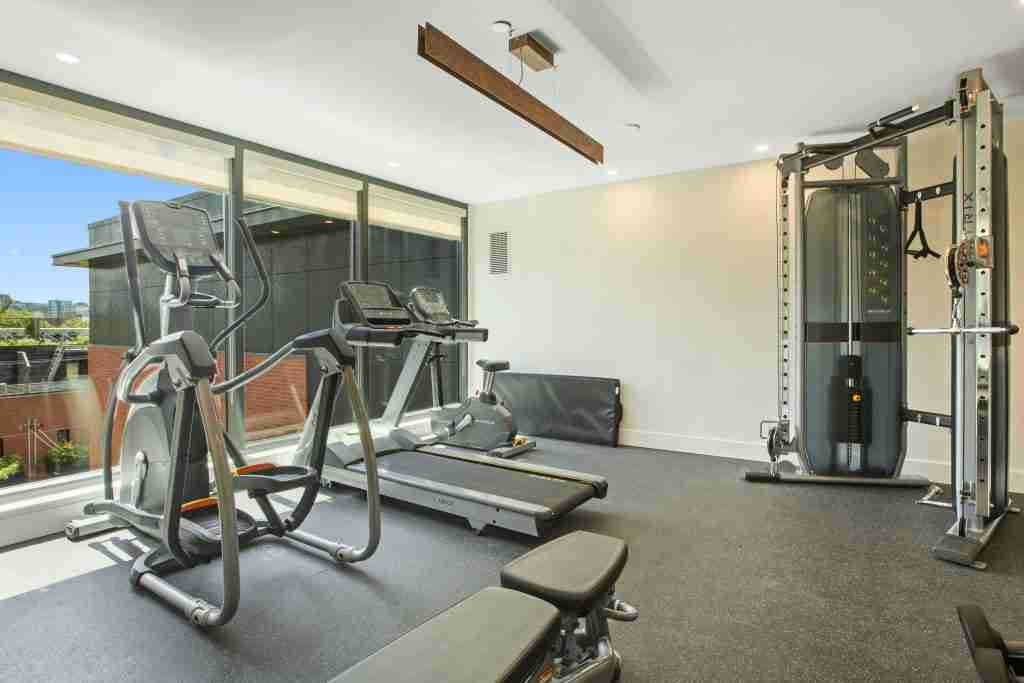
Running is thousands of repetitive steps. If your body isn’t strong enough to handle the impact, every stride reinforces weakness instead of progress, eventually leading to plateaus or injuries. That’s where strength training makes the difference. Instead of replacing your miles, it supports them — giving you the muscle power, balance, and resilience to handle training load without breaking down.
In this article, I’ll walk you through 6 essential strength training exercises for runners that target the muscles most responsible for performance and injury prevention.
Want to understand the bigger picture? Check out my Strength Training for Runners guide for a complete framework on how to fit these exercises into your training plan.
1. Low Plank
The low plank is one of the simplest but most powerful core stability exercises for runners. A strong core connects your upper and lower body, helping you maintain posture and efficiency during long runs. When your core fatigues, your form collapses, which wastes energy and increases injury risk. The low plank targets the deep abdominal muscles, obliques, and glutes, teaching you to stabilize your spine while moving.
Common mistakes include letting the hips sag, arching the back, or holding your breath instead of breathing steadily. Keeping your neck neutral and your body in a straight line ensures you’re training stability, not bad habits.
2. Deadlift
The deadlift builds strength in the posterior chain — glutes, hamstrings, and lower back — which are the engines behind every stride. For runners, this translates to stronger push-off, more powerful hip extension, and improved running economy. A solid deadlift also reduces the risk of hamstring pulls and lower back strain, two common issues in endurance athletes.
Many runners perform deadlifts incorrectly by rounding the back, pulling with the arms, or letting the bar drift away from the body. Focusing on hinging at the hips and keeping the bar close ensures the right muscles do the work.
3. Glute Bridge
The glute bridge teaches runners to properly activate their glutes — a muscle group that often “switches off” from too much sitting or weak movement patterns. Strong, firing glutes protect the knees, relieve pressure on the hamstrings, and keep your stride stable and efficient. This simple exercise targets the glutes, core, and hip stabilizers.
The biggest mistakes runners make in this exercise are arching the lower back instead of driving with the glutes, or pushing through the toes instead of the heels. Driving through the heels and pausing to squeeze at the top helps you truly activate the muscles that should be carrying you through your runs.
4. Lunge
The lunge is a run-specific strength exercise because it closely mimics the stride pattern of running. Working one leg at a time builds single-leg strength, balance, and hip mobility, all essential for smoother, more efficient strides. Lunges target the quads, glutes, and hip stabilizers while also training coordination between the core and lower body.
The most common mistakes include letting the front knee collapse inward or overstriding so the torso tips forward. Proper lunges require stacking the knee over the ankle and moving in control, not rushing through reps.
5. Step-Up
The step-up is a direct translation of the running stride into a strength movement. By stepping onto a box or bench, runners train the glutes, quads, and calves to generate explosive drive, exactly the kind of power needed for hills and sprints. Step-ups also challenge balance and coordination, making them highly transferable to running mechanics.
Runners often make the mistake of pushing off the back leg or using momentum instead of muscle. Keeping the torso tall and driving entirely through the lead foot ensures the right muscles are activated.
6. Side Plank
While running happens mostly in the forward plane, lateral stability is what keeps you injury-free. The side plank trains the obliques, hip abductors, and deep stabilizers that stop the knees from collapsing inward during every stride. This stability reduces stress on the knees and improves efficiency over long distances.
The most common mistakes are letting the hips drop or rotating the body instead of staying stacked. Proper form keeps the body in a straight line from head to heels, making the exercise a true test of stability.
How to Use These Exercises
You don’t need hours in the gym to benefit from strength training — consistency and smart progression are what matter most. These six movements can be worked into two short sessions per week, giving your body the support it needs without interfering with your mileage.
- If you’re just starting: Aim f or 2 sets of 8–12 reps of each exercise. For planks and side planks, hold 30–45 seconds per side. Focus on form and muscle activation before adding difficulty.
- If you already strength train occasionally: Add light weights or resistance bands to challenge the muscles and build durability.
- If you’re experienced and want a bigger edge: Progress to single-leg variations and plyometric versions to build explosive power and advanced stability.
For a complete framework, including how to combine these exercises with running mileage and recovery, see my Strength Training for Runners guide.
FAQs
No — bodyweight works to start. Weights add progression.
Yoga is a great supplement, but it doesn’t build maximal strength.
Most runners notice improvements in 4–6 weeks with consistency.
Conclusion
You don’t need dozens of gym moves. Just six core exercises done consistently will make you stronger, more efficient, and more resistant to injury. Pair them with smart mileage, good nutrition, and recovery for your best performances yet.
Ready for the next step? Download the Runner’s Performance Checklist to see how to combine strength, mileage, and fueling into a complete weekly plan.