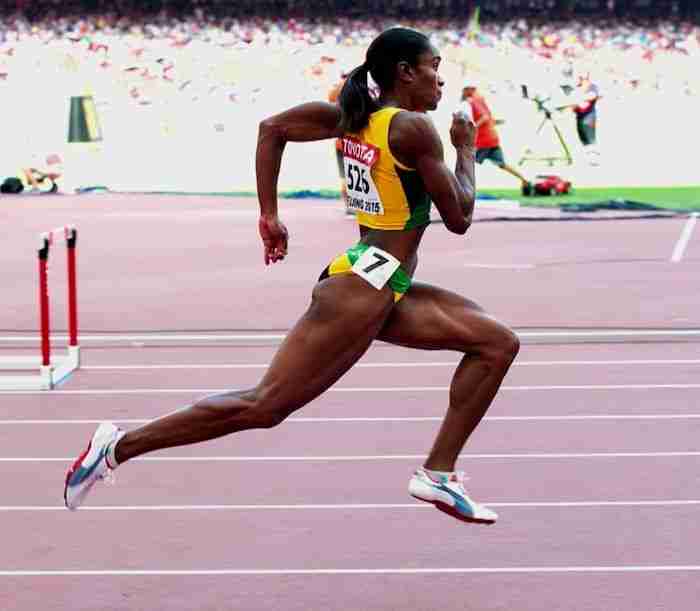
Running looks simple from the outside: one foot in front of the other, repeat. But the difference between proper running form and poor mechanics shows up in your pace, your injury risk, and how you feel after every run.
Most runners develop habits based on what feels natural rather than what’s biomechanically sound. Over time, these small inefficiencies compound into slower times, nagging aches, and injuries that sideline training. The good news: understanding proper running form and making targeted adjustments can transform your running immediately.
Here’s what actually matters for proper running form and how to fix the most common mistakes.
Why Running Form Matters
Proper running form determines how efficiently you move and how well your body absorbs impact forces. Good form distributes stress evenly across your muscles and joints. Poor form concentrates stress in vulnerable areas, creating the conditions for injury.
Every time your foot strikes the ground during running, your body absorbs forces equal to 2-3 times your body weight. Over the course of a single mile, that’s roughly 1,000 impacts per leg. If your form creates even small inefficiencies in how those forces distribute, the cumulative effect over thousands of steps becomes significant.
Running economy, how much oxygen you use at a given pace, directly relates to form efficiency. Runners with better form use less energy to maintain the same speed. This means you can run faster at the same effort level, or maintain your current pace with less fatigue.
Form Issues Show Up As Injuries
Specific form problems create predictable injury patterns. Overstriding (landing with your foot too far in front of your body) increases impact forces and commonly leads to shin splints and knee pain. Excessive vertical bounce wastes energy and stresses your knees and hips. Poor arm mechanics throw off your rotational balance, forcing your core and hips to compensate inefficiently.
Understanding this connection between form and injury changes how you approach running. You’re not just trying to look better or run faster, you’re actively preventing the breakdowns that end training streaks.
The Core Elements of Proper Running Form
Proper running form breaks down into several key components that work together. Changing one element often requires adjusting others to maintain balance and efficiency.
1. Posture and Body Position
What proper posture looks like:
Your torso should remain relatively upright with a slight forward lean from the ankles, not from the waist. Imagine a straight line running from your ear through your shoulder, hip, and ankle. This alignment keeps your center of mass over your base of support, minimizing the energy needed to propel yourself forward.
Why this matters:
Leaning too far forward from the waist increases strain on your lower back and doesn’t actually help you run faster—it just makes your hip flexors work harder to pull your legs through each stride. Leaning backward forces you to overstride and increases braking forces with each foot strike.
The slight forward lean from your ankles helps gravity assist your forward momentum. You’re essentially controlling a forward fall rather than pushing yourself along. This reduces the muscular work needed for each stride.
Common mistake: Sitting back in the hips, which happens when runners get tired. This creates a braking effect with each step and forces you to push harder just to maintain pace.
2. Foot Strike and Cadence
What proper foot strike looks like:
Your foot should land roughly underneath your center of mass, not far out in front of your body. The exact part of your foot that touches down first (heel, midfoot, or forefoot) matters less than where it lands relative to your body.
Why this matters:
Landing with your foot too far forward (overstriding) creates a braking force that you then have to overcome with each step. It’s like tapping the brakes thousands of times during a run, exhausting and slow. When your foot lands under your center of mass, you minimize this braking effect and create a more efficient loading and unloading of your leg’s spring-like tendons and muscles.
Cadence (steps per minute) connects directly to stride length and overstriding. Most efficient runners maintain a cadence around 170-180 steps per minute. Lower cadences often indicate overstriding, you’re trying to cover more ground with each step by reaching forward, which increases impact and reduces efficiency.
Common mistake: Reaching forward with the foot, trying to take bigger steps to run faster. This actually slows you down and dramatically increases injury risk. Speed comes from pushing off more forcefully, not from reaching farther forward.
3. Arm Mechanics
What proper arm swing looks like:
Your arms should swing naturally from the shoulders in a forward-and-back motion, not across your body. Elbows bend at roughly 90 degrees, and your hands swing from about hip height to chest level. Your hands should remain relatively relaxed, imagine holding a potato chip without crushing it.
Why this matters:
Your arms counterbalance your legs. Every time your right leg swings forward, your left arm swings forward to prevent your torso from rotating. Efficient arm mechanics reduce the rotational forces your core has to control, saving energy. They also help set your stride rhythm, your leg turnover naturally matches your arm swing speed.
When your arms cross your body’s midline, you introduce rotational movement that your hips and core must counteract. This wastes energy and can contribute to IT band issues and hip pain as your lower body compensates for the upper body rotation.
Common mistake: Letting arms cross the midline, often accompanied by rotating the shoulders excessively. This typically happens when runners get tired or tense up. Another common issue: carrying tension in the shoulders and neck, which restricts arm movement and wastes energy.
4. Hip Extension and Knee Drive
What proper hip extension looks like:
Your hip should fully extend behind you during push-off, with your thigh moving past vertical before your foot leaves the ground. Your knee then drives forward naturally as your leg swings through to the next foot strike.
Why this matters:
Hip extension during push-off is where you generate power. Runners who don’t fully extend their hips essentially leave free speed on the table, they’re not using their glutes and hamstrings effectively to propel themselves forward. This forces the quads and hip flexors to do more work pulling the body along rather than pushing it.
Full hip extension also allows your hip flexors and knee to drive forward more efficiently in the swing phase. The energy stored in your tendons during the push-off phase helps spring your leg forward for the next step.
Common mistake: “Sitting” in the hips without full extension, often combined with shuffling steps. This pattern shows up when runners get fatigued or haven’t developed glute strength. You see lots of knee drive but minimal push-off power.
5. Core Engagement and Stability
What proper core engagement looks like:
Your core shouldn’t be rigidly tight, but should maintain enough tension to keep your torso stable and prevent excessive rotation or side-to-side movement. Your pelvis should stay relatively level rather than dropping on one side with each step.
Why this matters:
A stable core provides the platform from which your legs generate force. If your torso rotates excessively or your pelvis tilts dramatically with each step, energy leaks out of the system. Your legs push against an unstable base, reducing the power transferred into forward motion.
Core stability also protects your spine from the repetitive impact forces of running. Without adequate core control, your lower back absorbs more stress with each step, potentially leading to pain over time.
Common mistake: Excessive rotation of the torso, often combined with arm swing across the midline. Another issue: letting the pelvis drop on one side (Trendelenburg sign), which indicates weak hip abductors and creates uneven loading through the kinetic chain.
The Most Common Running Form Mistakes
Understanding these specific errors helps you identify and correct your own form issues.
Overstriding
What it looks like: Your foot lands well ahead of your center of mass, often with a straight or locked knee. You can hear your foot slapping the ground with each step.
Why it happens: Runners often think longer strides mean faster running. Cultural messaging about “striding out” reinforces this misconception. Overstriding also happens when runners try to increase speed without increasing cadence.
How to fix it: Focus on increasing your cadence to 170-180 steps per minute. This naturally shortens your stride and brings your foot strike closer to your center of mass. Use a metronome app or find music with the right tempo. As your cadence increases, your stride length will decrease initially, but your overall speed won’t drop because you’re eliminating the braking forces of overstriding.
Not sure if you’re overstriding? A gait analysis can help show you exactly where it’s happening in your stride and how your body is distributing the loading forces.
Vertical Bounce
What it looks like: Excessive up-and-down movement of your center of mass. Your head bobs significantly when viewed from the side.
Why it happens: Pushing off too hard in a vertical rather than horizontal direction. This often stems from trying to “spring” off the ground or having weak glutes that don’t effectively direct force horizontally.
How to fix it: Focus on pushing back and through, not up. Imagine running underneath a low ceiling. Film yourself from the side and watch your head position—it should move forward more than up and down. Strengthening your glutes and working on hip extension helps redirect your power horizontally.
Heel Striking With Overstriding
What it looks like: Landing heavily on your heel with your foot extended in front of your body. This creates a visible braking action with each step.
Why it happens: This usually accompanies overstriding. When your foot lands far ahead of your body, the heel naturally strikes first. The issue isn’t the heel strike itself—it’s where the foot lands relative to your center of mass.
How to fix it: Again, increase cadence and focus on landing with your foot closer to your body. If you increase cadence without consciously trying to change your foot strike, you’ll likely find yourself landing more on your midfoot naturally. Don’t force a forefoot strike, just bring your foot strike point closer to your body.
Tensed Upper Body
What it looks like: Shoulders hunched up toward ears, hands clenched into fists, jaw tight, breathing restricted.
Why it happens: Tension from effort or stress, often getting worse as fatigue builds during a run. Some runners carry this tension habitually without realizing it.
How to fix it: Periodically do a body scan during your run. Drop your shoulders, shake out your hands, relax your jaw. The cue “run like a puppet with strings attached to your head and hands” helps, let everything hang loosely. Schedule these form checks every few minutes or at specific landmarks during your run.
Crossing Arms Across Midline
What it looks like: Arms swinging across the front of your body rather than forward and back. Often accompanied by shoulder rotation.
Why it happens: Weak core forcing upper body rotation to help generate forward momentum. Can also be a tension pattern or result from fatigue.
How to fix it: Focus on swinging your elbows straight back, not across. Your hands might still cross the midline slightly, but your elbows should drive back alongside your torso. Imagine running between two parallel walls, your elbows can’t touch either wall. Core strengthening also helps reduce the compensatory rotation.
How to Actually Improve Your Running Form
Knowing what proper running form looks like is different from being able to implement it. Here’s a practical approach to making lasting changes.
Start with Video Analysis
Record yourself running from the side and from behind. Use your phone propped on a fence or have a friend film you. Run at your normal easy pace, don’t try to perform for the camera because that won’t show your actual habits. Watch for the big issues first: overstriding, excessive vertical bounce, arm crossing. Don’t try to fix everything at once. Pick the one most obvious problem and work on that first.
Make One Change at a Time
Your current form, even if inefficient, is what your body knows. Changing multiple elements simultaneously overwhelms your ability to integrate new patterns. Pick one element and work on it for 2-3 weeks before adding another focus.
For example, if overstriding is your main issue, spend a few weeks working on cadence and foot strike. Once that feels natural, then address arm swing or posture if needed.
Use Form Cues During Easy Runs
Don’t try to overhaul your form during hard workouts or long runs. Use easy runs and recovery runs to practice form changes. Your body needs low-stress environments to learn new movement patterns.
Set a timer to check in on your proper running form every 5 minutes during easy runs. Focus on one specific cue: “foot lands under hips” or “relax shoulders” or “elbows drive back.” Brief, frequent reminders work better than trying to maintain perfect form for an entire run.
Build Supporting Strength
Many form issues stem from weakness or imbalances. If your glutes are weak, you can’t achieve full hip extension no matter how much you focus on the cue. If your hip abductors are weak, your pelvis will drop on one side even when you try to keep it level.
Incorporate strength training that addresses common runner weaknesses: glutes, hip abductors, core stability, and ankle stability. The exercises from our runner’s knee guide target many of these same muscle groups and directly support better running form.
For comprehensive strength programming that supports running performance, the Flex program integrates strength work specifically designed to improve running mechanics and prevent injuries.
Accept That Form Changes Feel Awkward Initially
When you change your running form, it will feel wrong at first. You’ve been running with your current pattern for hundreds or thousands of miles, your neuromuscular system has optimized for that pattern, even if it’s mechanically inefficient.
New patterns feel awkward and often require more conscious effort initially. This doesn’t mean they’re wrong. Give your body time to adapt. The awkwardness typically resolves within 2-3 weeks of consistent practice if you’re making beneficial changes.
When to Seek Professional Help
Some runners benefit from working with a running coach or physical therapist who specializes in running gait analysis. Consider professional help if you have recurring injuries that don’t resolve with rest and basic form corrections, significant asymmetries between your left and right sides, or you’ve plateaued in your running performance despite consistent training.
A professional can identify subtle issues that don’t show up on video and provide personalized cues that work for your specific movement patterns.
The Bottom Line
Proper running form isn’t about looking like an Olympic marathoner. It’s about running efficiently in a way that minimizes injury risk and allows you to maintain your training consistently.
Focus on the basics first: landing with your foot under your body rather than far ahead, maintaining a cadence around 170-180 steps per minute, keeping your torso upright with a slight forward lean from the ankles, swinging your arms forward and back rather than across your body, and achieving full hip extension during push-off.
Make changes gradually, one element at a time, during easy runs. Support those changes with appropriate strength training. Be patient with the process. Developing proper running form doesn’t happen overnight, but it pays dividends in speed, efficiency, and injury prevention over the long term.
FAQs About Running Form
The specific part of your foot that touches down first matters less than where your foot lands relative to your center of mass. Both heel and forefoot striking can be efficient if your foot lands underneath your body rather than far ahead. Many distance runners naturally heel strike and run efficiently. Don’t force a forefoot strike, instead, focus on reducing overstriding by increasing cadence, and your foot strike pattern will likely improve naturally.
Use a metronome app set to 170-180 beats per minute, matching one foot strike to each beat. Or find music playlists specifically curated for running cadence. Start by practicing higher cadence during short segments of easy runs—just 1-2 minutes at a time. Gradually extend these intervals. Your stride will feel shorter initially, but you’re eliminating inefficient overstriding. Within a few weeks, the higher cadence will feel natural.
Possibly yes, for a few weeks. Your body is efficient at your current form even if it’s mechanically suboptimal. New patterns require conscious effort and feel awkward initially. Your pace might drop slightly during the adaptation period. This is temporary. Once the new pattern becomes automatic (usually 2-4 weeks), you’ll likely run faster at the same effort because you’re eliminating the inefficiencies of your previous form.
Expect 2-3 weeks for a new pattern to start feeling natural, and 6-8 weeks for it to become fully automatic. Make one change at a time and practice consistently during easy runs. Trying to change everything at once or only thinking about form occasionally won’t create lasting adaptation. Brief, frequent practice works better than occasional intensive focus.
No. Shoe choice matters less than where your foot lands relative to your body. Extremely cushioned or motion-control shoes don’t fix form problems, they might temporarily mask symptoms, but the underlying inefficiency remains. Focus on form corrections first. Most runners do fine in moderately cushioned neutral shoes, but the specific shoe depends on your individual biomechanics and preferences, not on achieving “proper form.”
The specific part of your foot that touches down first matters less than where your foot lands relative to your center of mass. Both heel and forefoot striking can be efficient if your foot lands underneath your body rather than far ahead. Many distance runners naturally heel strike and run efficiently. Don’t force a forefoot strike, instead, focus on reducing overstriding by increasing cadence, and your foot strike pattern will likely improve naturally.
Use a metronome app set to 170-180 beats per minute, matching one foot strike to each beat. Or find music playlists specifically curated for running cadence. Start by practicing higher cadence during short segments of easy runs, just 1-2 minutes at a time. Gradually extend these intervals. Your stride will feel shorter initially, but you’re eliminating inefficient overstriding. Within a few weeks, the higher cadence will feel natural.
Possibly yes, for a few weeks. Your body is efficient at your current form even if it’s mechanically suboptimal. New patterns require conscious effort and feel awkward initially. Your pace might drop slightly during the adaptation period. This is temporary. Once the new pattern becomes automatic (usually 2-4 weeks), you’ll likely run faster at the same effort because you’re eliminating the inefficiencies of your previous form.
Expect 2-3 weeks for a new pattern to start feeling natural, and 6-8 weeks for it to become fully automatic. Make one change at a time and practice consistently during easy runs. Trying to change everything at once or only thinking about form occasionally won’t create lasting adaptation. Brief, frequent practice works better than occasional intensive focus.
No. Shoe choice matters less than where your foot lands relative to your body. Extremely cushioned or motion-control shoes don’t fix form problems, they might temporarily mask symptoms, but the underlying inefficiency remains. Focus on form corrections first. Most runners do fine in moderately cushioned neutral shoes, but the specific shoe depends on your individual biomechanics and preferences, not on achieving “proper form.”